Three Projects, Three Disciplines, New Research Horizons: TÜBİTAK ARDEB 1001 Funding Awarded to KHAS
The results of the first 2026 term of the 1001 – Scientific and Technological Research Projects Funding Program, administered by the Scientific and Technological Research Council of Türkiye (TÜBİTAK) through its Research Support Programs Directorate (ARDEB), have been announced. Following the evaluation process, three research projects from Kadir Has University (KHAS) have been awarded funding.
Spanning molecular biology, robotics, sustainable buildings, and smart energy management, the projects aim to advance scientific knowledge across different disciplines and develop innovative solutions to contemporary challenges.
Understanding Gene Interactions and Cellular Changes
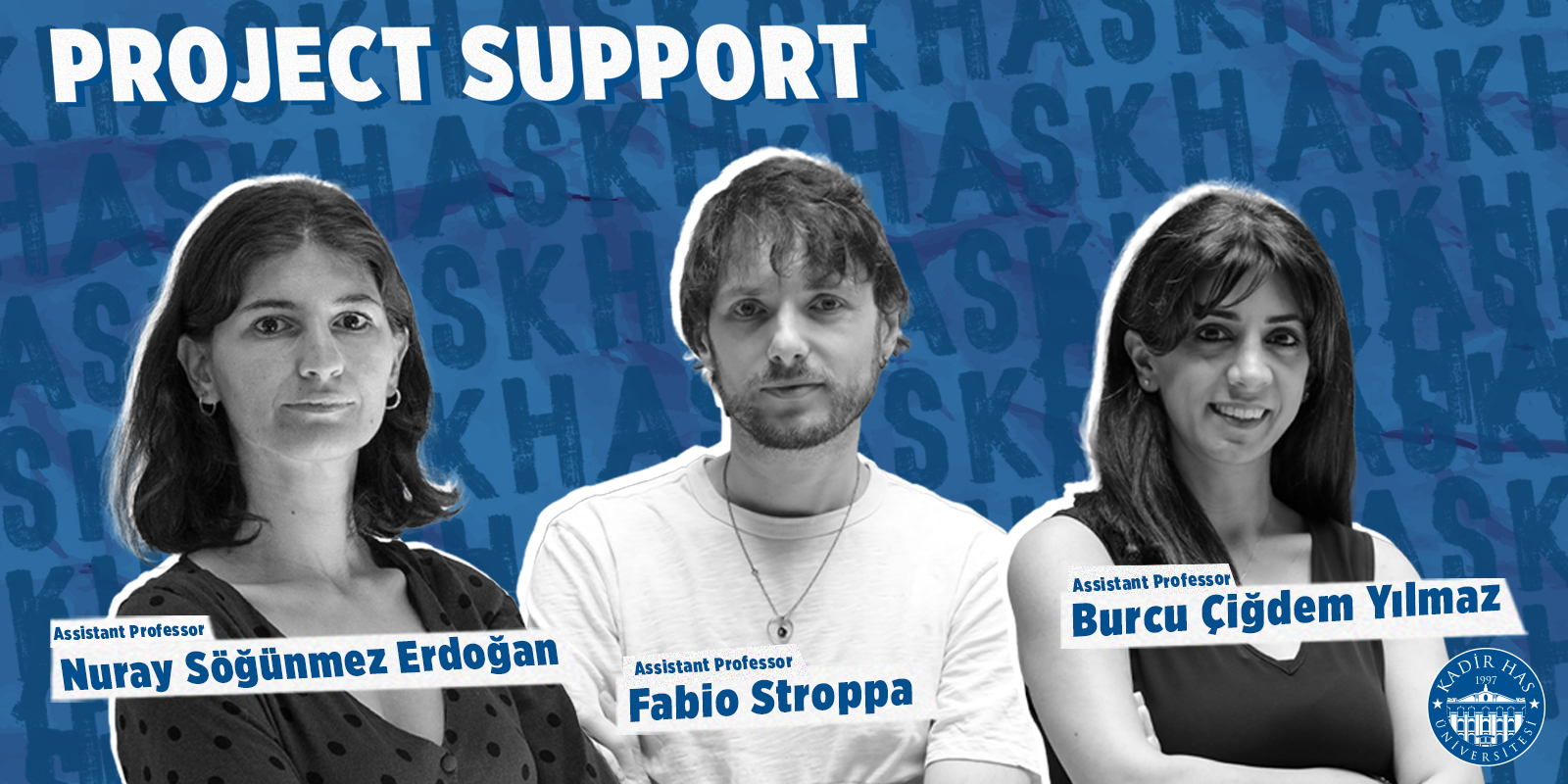
The project titled “Dynamic Analysis of Gene Interaction Networks in Irregular Single-Cell RNA Sequencing Time Series”, led by Asst. Prof. Nuray Söğünmez Erdoğan from the Department of Molecular Biology and Genetics investigates how gene interactions change over time using single-cell RNA sequencing data collected at different time points.
Genes function within complex networks that jointly regulate cellular processes and development.
The computational model to be developed within the project will be used to examine how these interactions relate to cell differentiation. The project aims to predict the future developmental trajectories of cells and identify critical stages of differentiation. The study is expected to provide new analytical tools that may contribute to a better understanding of fundamental biological processes and the investigation of disease-related mechanisms.
New Designs for Robots That Can Navigate Confined Spaces
The project titled “Scalable Architectures for Soft Growing Robots with Active Retraction and Tool Integration”, led by Asst. Prof. Fabio Stroppa from the Department of Computer Engineering, aims to develop new design and manufacturing methods for soft robots capable of moving through narrow and hard-to-access spaces. Asst. Prof. Mine Saraç Stroppa serves as an advisor on the project.
Unlike conventional robots, soft robots can adapt to their surroundings thanks to their flexible structures. The project will investigate how several capabilities can be integrated into a single design approach, including controlled extension and retraction, the ability to carry different tools, and adjustable stiffness in specific sections as needed.
The technology to be developed has potential applications in inspecting confined, difficult-to-access spaces, medical and biomedical applications, and the development of assistive and domestic robots that need to pass through narrow openings to reach specific locations.
User-Centred Energy Efficiency in Educational Buildings
The project titled “Enhancing User-Centred Energy Efficiency in Educational Buildings: Machine Learning-Based Behavioral Models and Optimal Control Strategies”, led by Asst. Prof. Burcu Çiğdem Yılmaz from the Department of Interior Architecture and Environmental Design, addresses user behavior and indoor comfort together to improve energy efficiency in educational buildings.
Energy consumption in buildings depends not only on physical conditions but also on how occupants use spaces and on their comfort requirements. The project plans to classify user behaviours and investigate the conditions under which different sensors can identify occupants’ needs more accurately.
By analysing the resulting data using machine learning methods, the project aims to develop smart control systems that reduce energy consumption while maintaining user comfort.
Prof. Dr. Banu Manav, Asst. Prof. Mine Koyaz Güçer, and Asst. Prof. Arif Selçuk Öğrenci serves as a researcher on the project, while Prof. Dr. Taner Arsan serves as an advisor.