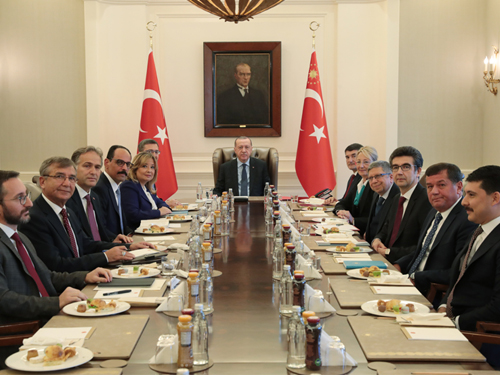
Prof. Dr. Mustafa Aydın, a faculty member of the Department of Political Science and International Relations at Kadir Has University, is a member of the Security and Foreign Policies Council of the Presidency of the Republic of Türkiye and actively serves in this role.
Relationships with Regional NGOs and Government for SDG Policy
PROVIDING EXPERT ADVICE TO THE GOVERNMENT
Kadir Has University (KHAS) maintains an active and constructive dialogue with local, regional, and national authorities by offering research-based insights, expert consultation, and strategic recommendations in fields related to its academic and scientific strengths.
Through its institutional collaborations, advisory memberships, and joint initiatives, the University contributes to the development and execution of public policies designed to address pressing social, economic, technological, and environmental issues.
KHAS’s involvement includes preparing expert reports for public institutions, taking part in various ministerial and municipal working groups, conducting joint R&D and policy projects, and organizing professional development programs for public administrators and decision-makers.
These efforts reflect the University’s ongoing commitment to supporting transparent, inclusive, and evidence-driven governance, while reinforcing the bridge between academia and the public sector.
A selection of collaborative projects and expert contributions carried out with government partners during the reporting period is outlined below.
Contribution to the Turkish Higher Education 2030 Vision Document
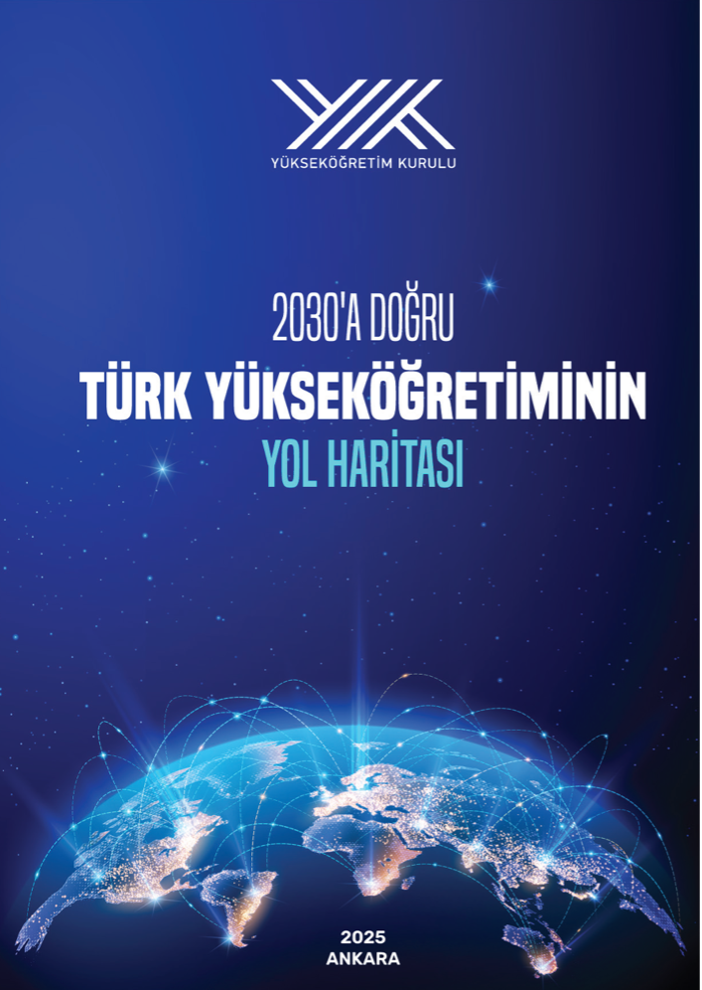
Kadir Has University Vice Rector, Prof. Dr. Ali SINAĞ, contributed to the preparation process of the “Turkish Higher Education 2030 Vision Document” coordinated by the Council of Higher Education (Yükseköğretim Kurulu – YÖK).
During the official presentation of the roadmap, YÖK President Prof. Dr. Erol Özvar announced key structural and policy reforms that will shape the future of Turkish higher education. Among the highlighted priorities were:
- Introducing structural reforms that will enable students to graduate within three years,
- Allowing students to take future-year courses during summer terms,
- Expanding the workplace-based practical education model across universities,
- Establishing the Türkiye–Syria Friendship University in Damascus, and
- Revising admission quotas for specific programs, including pharmacy, dentistry, and other health-related fields.
Through the involvement of experts such as Prof. Dr. Ali SINAĞ, Kadir Has University’s Vice Rector, this strategic vision aims to strengthen the adaptability, quality, and international competitiveness of Turkish higher education by 2030.
COLLABORATION WITH GOVERNMENT
Kadir Has university actively engages in policy-focused research in collaboration with government bodies to promote social and economic development.
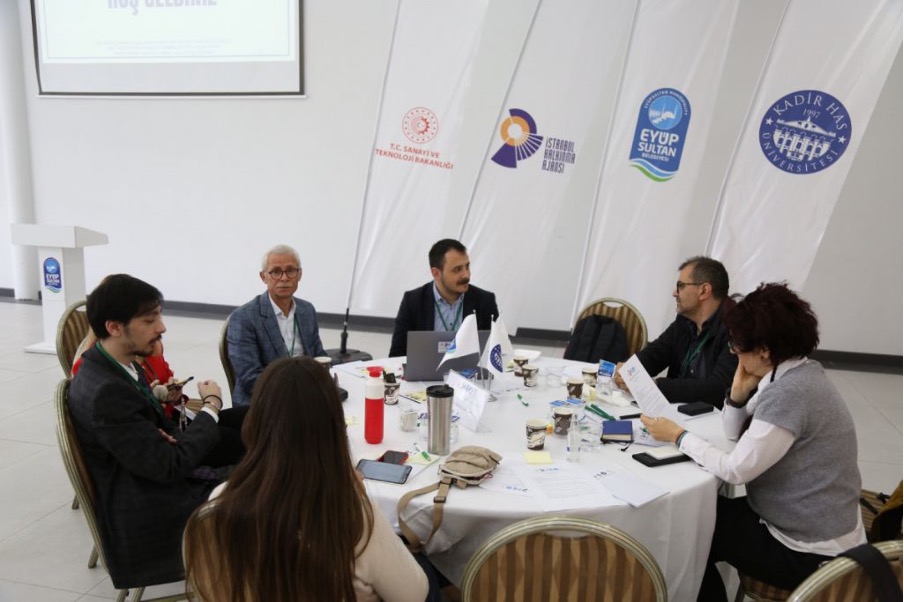
KADIR HAS UNIVERSITY & ISTANBUL DEVELOPMENT AGENCY/ EYUPSULTAN MUNICIPALITY PROJECT: AGRICULTURE 4.0 POLICIES APPLICATION AND RESEARCH CENTER
As part of the Istanbul Development Agency’s 2021 Innovative Istanbul Financial Support Program (TR10/21/YEP/0126), the Agriculture 4.0 Policies Application and Research Center was established in February 2022. The project, led by Eyüpsultan Municipality in partnership with Kadir Has University, has been operating at the Eyüpsultan Municipality Göktürk Additional Service Building since May 2022.
The center aims to enhance sustainable agriculture in Istanbul by increasing the added value in local agricultural areas through pilot studies focusing on technology-supported development and sustainability. It fosters knowledge-intensive production in the agricultural sector and brings together universities, NGOs, government agencies, producers, and food entrepreneurs through information and communication technologies. The overarching goal is to develop policies and practices that facilitate Turkey’s integration into the Agriculture 4.0 process.
In line with these objectives, a workshop led by Kadir Has University was held on May 3–4, 2023, with the participation of academics, institutions, entrepreneurs, and volunteers to evaluate ideas, solutions, and policy recommendations for sustainable and technology-based transformations in urban agriculture and the food sector.
Throughout 2024, the project continued its activities, focusing on extending pilot implementations, enhancing stakeholder collaboration, and disseminating research outputs and policy recommendations developed during the earlier phases. The ongoing collaboration underscores the University’s sustained contribution to promoting innovative, technology-driven, and sustainable agricultural practices within Istanbul and beyond.
KADIR HAS UNIVERSITY & ISTANBUL DEVELOPMENT AGENCY/MINISTRY OF DEVELOPMENT PROJECT: DESIGNHUB-IST
Located inside the grounds of Kadir Has University, the DESIGNHUB-IST Design, Education, and Application Centre is an active organization committed to developing projects, services, and applications that bring significant value to Istanbul’s design scene.
In keeping with our primary goal of elevating the status of creative industries in the country’s design sector, the DESIGNHUB-IST operates as a physical hub as well as a digital platform, providing a range of services to businesses engaged in design-related activities, particularly those developing into design hubs, mostly in Istanbul. Working in the more general field of interior design, our main goal is to support the development of high-end designs in areas like lighting, acoustics, and evidence-based/user-oriented design.
By means of our center, which serves as a platform for cooperative design research between academic institutions, government agencies, and the commercial sector, we aim to promote practical projects and knowledge sharing, promoting multidisciplinary service models. By working together, we hope to improve the nation’s service delivery system and quality of life while meeting a range of needs.
It is important to clarify that the information contained in this publication, which was created as part of the Istanbul Development Agency-sponsored “DESIGNHUB-IST Design, Training, and Application Center” Project, does not represent the opinions of the Ministry of Development or the Istanbul Development Agency. The project’s benefactor is the only one with content accountability.
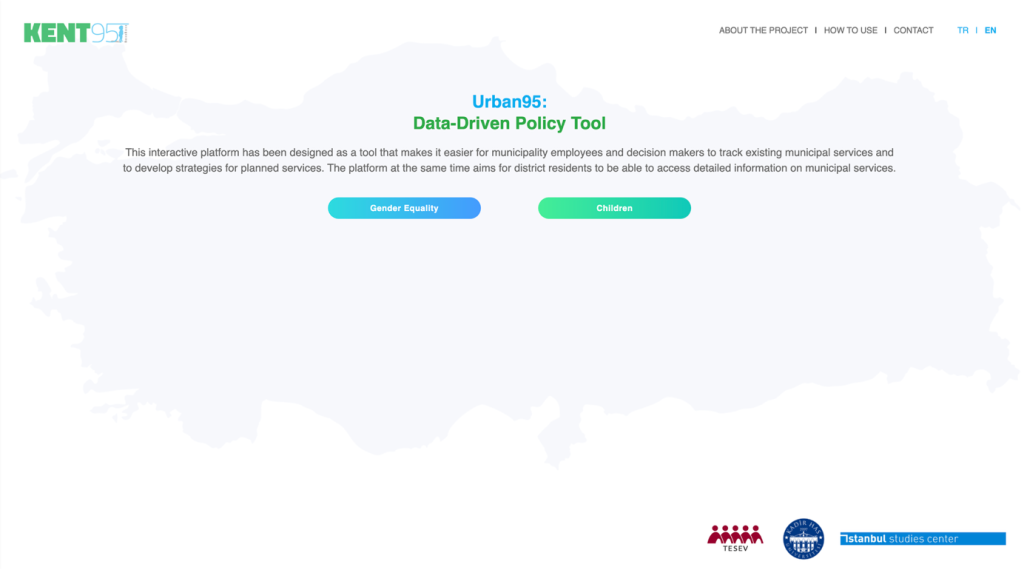
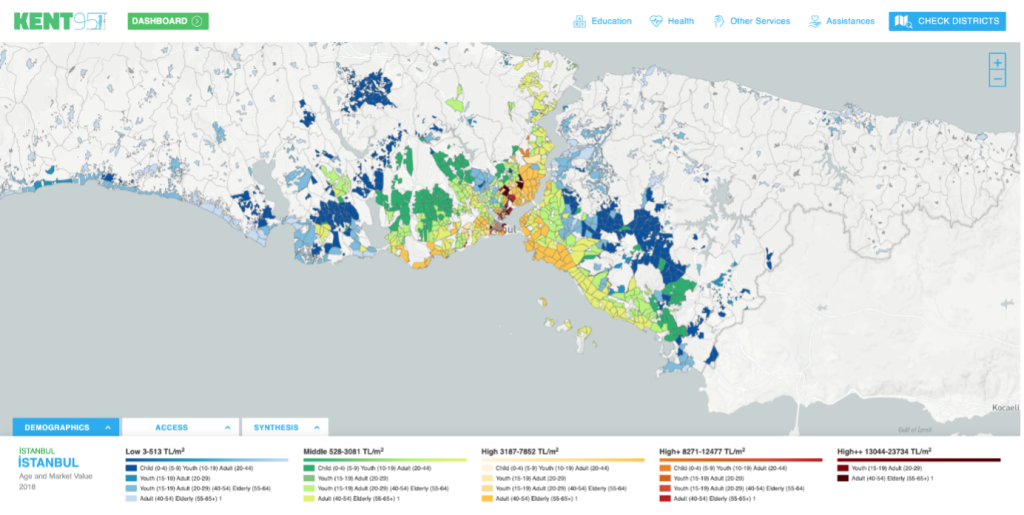
URBAN DATA DASHBOARD
Kadir Has University’s Istanbul Studies Center and the Turkish Economic and Social Studies Foundation (TESEV) have partnered to carry out the project “Empowering Civil Society and Municipalities for Data-Driven Participatory Gender Equality Policies.” The project is purposefully crafted to meet the pressing demand for easily obtainable information regarding gender disparities and how they are distributed at the local community level, particularly in the areas of İzmir and Balıkesir. The primary goal is to emphasize the importance of making decisions based on data, and this goal is successfully achieved by visualizing the data on an interactive platform.
By encouraging more cooperation and partnership between CSOs and local government entities, the project hopes to increase advocacy efforts within civil society organizations. Women’s CSOs have a platform to express new, varied, and concrete demands for urban governance based on gender equality when geographical and urban evidence is provided. This gives these CSOs the ability to take part in advocacy work and informed engagement that promotes gender equality, which in turn promotes good change and social progress.
As part of the project’s comprehensive efforts, gender-sensitive neighborhood-level datasets were meticulously compiled for both of the project cities. These datasets encompassed a wide range of critical indicators, including average household size, marital status, educational attainment, population density, access to preschool education, health services, and the availability of public transportation services. In order to facilitate the monitoring of gender inequalities across geographic distributions, thematic and synthesis maps were created.
For more detailed information and access to these invaluable resources, you are encouraged to visit the following link: https://map.kent95.org/#. This online platform offers a wealth of insights and data-driven tools that can shed light on the gender disparities within these neighborhoods, fostering informed decision-making and promoting equality and inclusivity.
Kadir Has University (KHAS) and BEDAŞ Collaborate on R&D
Kadir Has University continues to form partnerships with key players from various sectors for R&D activities. KHAS has recently entered into a comprehensive collaboration with Boğaziçi Elektrik Dağıtım A.Ş. (BEDAŞ), covering areas from joint R&D projects to internship programs.
According to the protocol signed by KHAS Rector Prof. Dr. Sondan Durukanoğlu Feyiz and BEDAŞ General Manager Murat Yiğit, the two institutions will conduct joint R&D projects focused on the energy sector and participate together in projects funded by external sources such as Horizon Europe and TÜBİTAK. Additionally, KHAS students will have the opportunity to intern at BEDAŞ, and KHAS will offer discounts on master’s and Ph.D. programs to BEDAŞ employees.
Collaboration Offers Opportunities for KHAS Students and BEDAŞ Employees
Described by KHAS Rector Prof. Dr. Sondan Durukanoğlu Feyiz as “an important step for all stakeholders in university-industry cooperation,” this collaboration offers multiple advantages for both KHAS students and BEDAŞ employees, beyond R&D activities. Under the protocol, KHAS students who meet the necessary criteria will be eligible to participate in short- and long-term internship programs at BEDAŞ.
To support the education of engineers needed in the energy sector, a BEDAŞ representative will join the Academic Advisory Board in departments such as Electrical-Electronics Engineering, Management Information Systems, and Computer Engineering at KHAS to share their expertise.
Together, the two institutions will organize events like conferences and symposiums on scientific, technological, and technical advancements. BEDAŞ experts will also give seminars at KHAS, bringing practical knowledge to the classroom, while KHAS academics will conduct seminars and training at BEDAŞ.
Special discounts on tuition fees will be offered to BEDAŞ personnel who meet KHAS’s admission requirements and wish to pursue a thesis-based master’s or doctoral program at KHAS. If their thesis topic is funded by organizations such as the European Union or TÜBİTAK, the tuition fee discount could reach 100%, fully covered by the university.
FATIH MUNICIPALITY & KHAS SURVEY PROJECTS
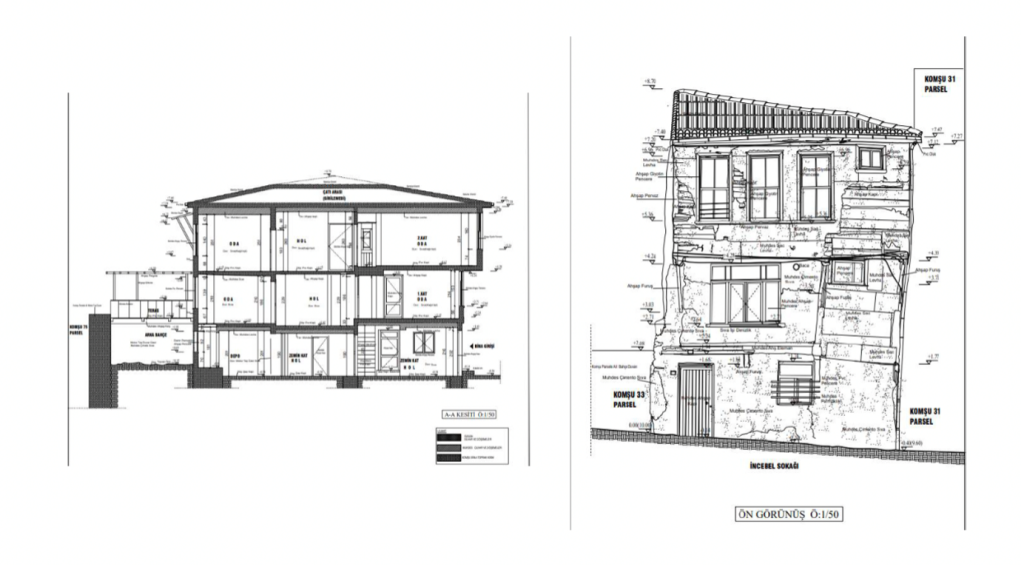
During the initial phase of the project, which has been collaboratively undertaken by Istanbul Fatih Municipality and Kadir Has University since 2022, the primary objective is to address the renovation and maintenance of a total of 70 buildings. These specific structures, identified by the Municipality, are systematically documented within a dedicated database. This project represents a concerted effort to eliminate any gaps in data pertaining to the buildings within the region and to establish a comprehensive address planning database.
Prior to the commencement of the survey activities in this region, a comprehensive three-dimensional scanning process was conducted for all the previously identified buildings. Three-dimensional scanning can be likened to an X-ray for buildings, offering an intricate view of the structures with all their intricate details. Subsequently, on a parcel-by-parcel basis, survey work was diligently carried out at each location where the scanned buildings are situated, and the acquired data was methodically integrated into the Municipality’s database.
Out of the 70 surveys originally slated for completion, a significant milestone has been reached with the successful completion of 39 surveys. The ongoing efforts are directed toward finalizing the remaining surveys for the remaining islands and parcels, ensuring that this important database is both comprehensive and up-to-date.
In the unfortunate event of a disaster, such as building damage or demolition, it becomes essential to access the historical records and information related to the buildings on that island parcel. This underscores the crucial importance of conducting building surveys, which are being diligently pursued by public institutions. The ongoing efforts to complete these missing surveys play a pivotal role in ensuring that vital historical data about these structures is readily available for reference and decision-making in times of need.
On 2 August 2023, in the evaluation meeting on “Surveying, Restitution and Restoration Studies of Immovable Cultural Heritage in Istanbul Province” held under the chairmanship of Istanbul Governor Davut GÜL in the meeting hall of Istanbul Governorship AFAD, Fatih Mayor Mehmet Ergün Turan mentioned the surveying studies we carried out and said that it is the first university among universities to undertake such a project.
TRAINING FOR YOUNG WOMEN SOFTWARE DEVELOPERS AT KADIR HAS UNIVERSITY AND ISTANBUL METROPOLITAN MUNICIPALITY
Another notable example is our partnership with the Istanbul Metropolitan Municipality (IBB) on a project to train and employ young women in the tech industry. This initiative, the “Program to Train Female Software Developers,” was launched by IBB’s Human Resources and Training Department. It aims to celebrate the 100th anniversary of our Republic by training and employing 100 female software developers in the information technology sector.
Through this project, Kadir Has University provides 500 hours of intensive training to selected female candidates with associate or bachelor’s degrees who wish to pursue careers in IT. The program includes courses in “Career in the Informatics World,” “Introduction to Computer Programming,” and 450 hours of “Applied Computer Programming” over a 15-week period, taught by faculty from our Management Information Systems department.
Our Vice Rector and R&D Resources Director, Prof. Dr. Hasan Dağ, emphasized that this collaboration aligns with the university’s White Doves Scholarship Program, which supports talented students facing financial challenges, particularly young women. This project reflects our commitment to policy-focused initiatives that foster equal opportunities in education and employment, advancing Turkey’s goals in both social and economic spheres.
Detailed information about the Program to Train Female Software Developers:
100kadinyazilimci.istanbul & https://www.khas.edu.tr/en/khas-and-istanbul-metropolitan-municipality-join-forces-to-train-young-female-software-developer
KADIR HAS UNIVERSITY & SILIVRI MUNICIPALITY FREE UNIVERSITY ENTRANCE EXAM PREPARATORY COURSE
In order to better prepare Silivri students for the Higher Education Institutions Examination (YKS) and to increase equality of opportunity in education, a free university preparation course was implemented in cooperation with Silivri Municipality and Kadir Has University. In the university preparation course held at Kadir Has University Selimpaşa Campus, 122 students consisting of high school seniors and high school graduates received free education. 21 students were admitted to engineering faculty, 12 students to faculty of health sciences, 1 student to faculty of law, 5 students to faculty of nursing, 18 students to faculty of science and literature, 19 students to faculty of architecture, 15 students to faculty of business administration, 8 students to faculty of communication.
International Law of the Sea Summer Academy 2024
In 2024, the KHAS International Maritime Law Summer Academy was held between 22 July and 8 August 2024 at Kadir Has University Cibali Campus, in collaboration with DEHUKAM (National Center for the Law of the Sea, Türkiye) and the National University of Singapore Centre for International Law (CIL-NUS).
The Summer Academy once again brought together judges from international courts, distinguished academics, and practitioners working in the field of international law. The program provided advanced training on the law of the sea and maritime law, combining theoretical lectures with practical case studies and interactive sessions. All courses were delivered in English by experts from leading international institutions.
The 2024 program included three intensive weeks covering key topics such as:
- Maritime Zones under National Jurisdiction, Marine Scientific Research, and Offshore Renewable Energy;
- Freedom of Navigation, Marine Pollution and Environmental Protection, Maritime Delimitation, Illegal Fishing, and Dispute Settlement Mechanisms;
- Climate Change and the Oceans, Human Rights at Sea, Ship Liability and Salvage, and Developments at the International Maritime Organization (IMO) regarding Autonomous Ships.
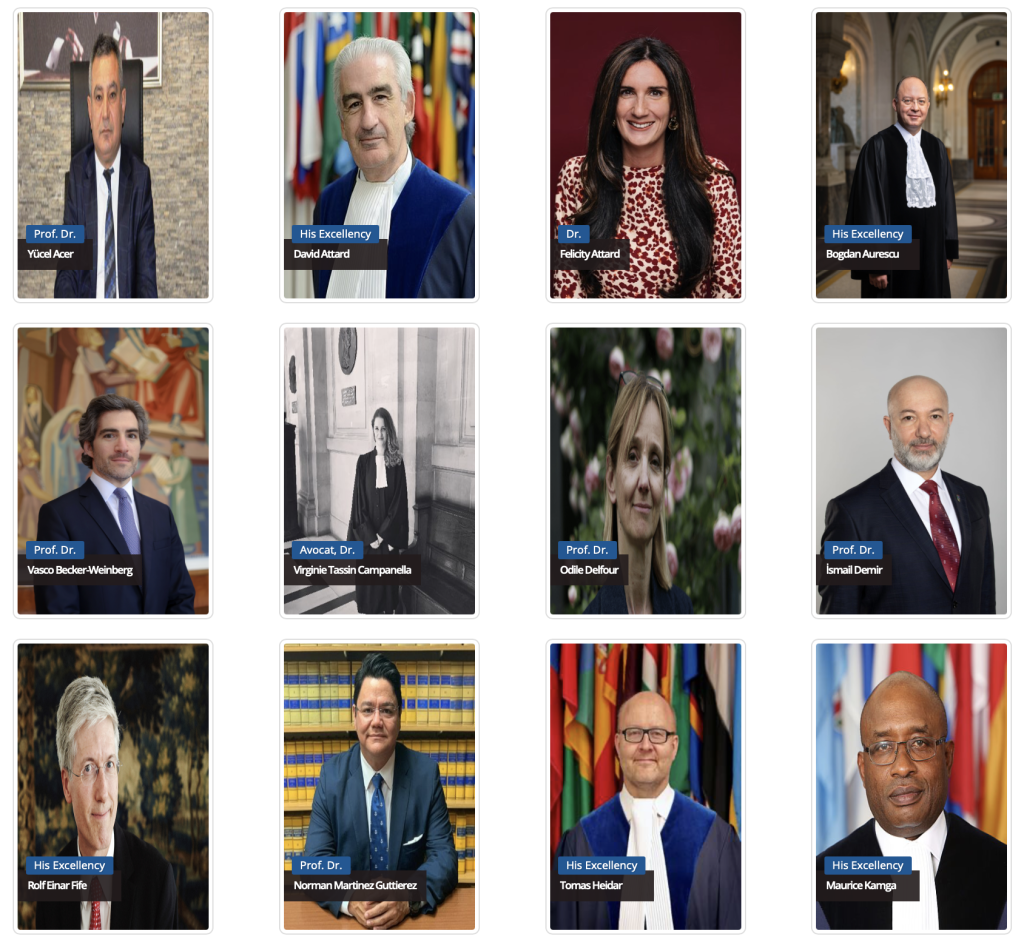
Distinguished lecturers included figures such as Prof. Dr. Yücel Acer (DEHUKAM), Prof. Dr. Suzette Suarez (Hochschule Bremen), Prof. Dr. Erik Franckx (Vrije Universiteit Brussel), Dr. Nilufer Oral (CIL-NUS/ILC), and H.E. Judge Maurice Kamga (ITLOS), among many others. The program also featured educational visits to institutions such as the Coast Guard Command and the Directorate General of Coastal Safety, offering participants valuable practical insights.
By bringing together participants from diverse backgrounds and institutions, the 2024 Summer Academy once again strengthened international collaboration in maritime law education and advanced understanding of emerging global maritime challenges.
For detailed information about the 2024 program, please visit: lawoftheseaacademy.khas.edu.tr
Kadir Has University Climate Change and Law Laboratory (CCLLAB) – 2024 Activities
Throughout 2024, the Kadir Has University Climate Change and Law Laboratory (CCLLAB) continued its mission of fostering academic dialogue on the intersection of climate change and law through a series of seminars and events featuring distinguished experts from academia and civil society.
As part of its Climate Change and Law Seminar Series, CCLLAB hosted Mehmet Botan Kayhan from the Environmental Policies and International Relations Department of TEMA Foundation on March 22, 2024. His presentation, titled “Climate-Specific Changes in International Law: Climate-Specific Agreements,” explored the evolution of international legal frameworks responding to climate change. The seminar was held online via Zoom and was open to all interested participants.
In 2024, CCLLAB also welcomed Asst. Prof. Dr. Najiba Mustafayeva, Assistant Professor at Ibn Haldun University and Adjunct Professor at ADA University, for a lecture titled “Human Rights in Climate Change Regime.” Dr. Mustafayeva discussed the human rights dimensions of climate governance, emphasizing the global legal and ethical responsibilities of states. The event was held online via Microsoft Teams and open to the public, reflecting CCLLAB’s commitment to inclusive academic exchange.
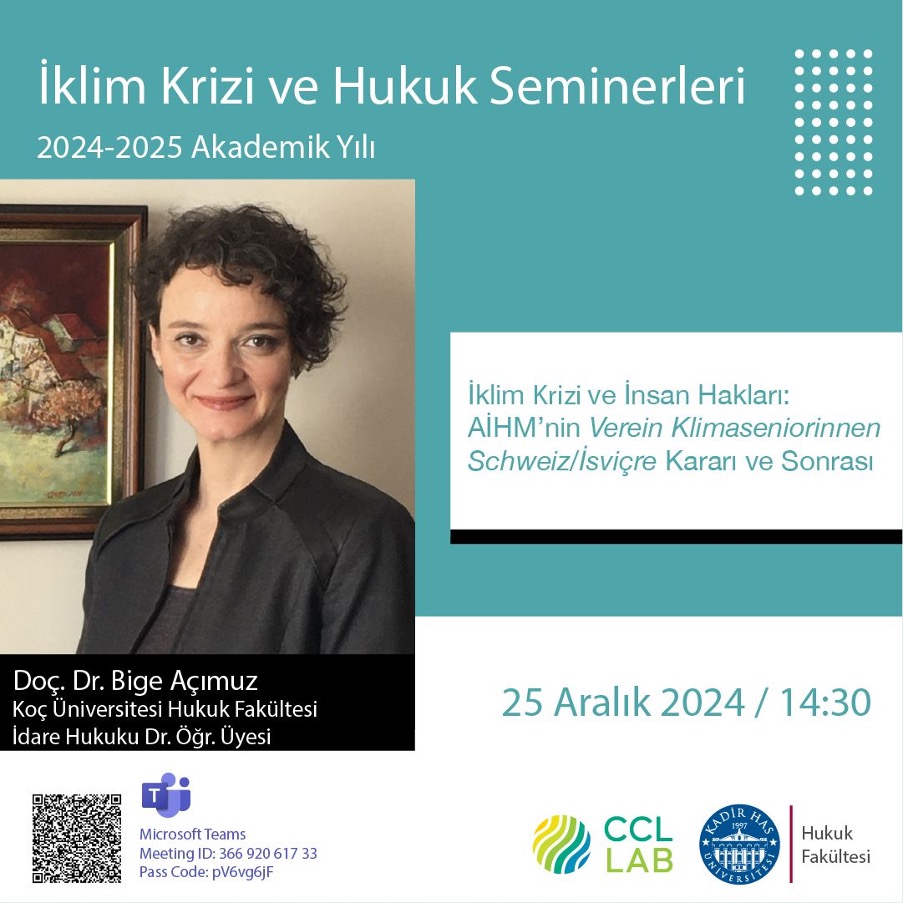
The Laboratory’s final event of the year took place on December 25, 2024, featuring Assoc. Prof. Dr. Bige Açımuz from Koç University Faculty of Law. Her seminar, titled “The European Court of Human Rights’ Verein Klimaseniorinnen Schweiz v. Switzerland Judgment and Its Implications,” analyzed one of the most significant climate litigation decisions of the European Court of Human Rights (ECtHR) and discussed its broader legal and policy consequences for Türkiye and Europe.
All events were open to the public through online platforms, ensuring broad accessibility and engagement. Through these activities, CCLLAB continued to strengthen its position as a national and international hub for climate law research, policy dialogue, and interdisciplinary collaboration.
KHAS High School Law Academy: Current Developments in Law (2024)
As part of its outreach and educational engagement activities, Kadir Has University Faculty of Law organized the KHAS High School Law Academy: Current Developments in Law on Wednesday, May 22, 2024, at the Cibali Campus.
The event aimed to introduce high school students to contemporary legal issues and to provide them with a first-hand experience of the university’s interactive and case-based approach to legal education. The program brought together KHAS Faculty of Law academics and students, creating a stimulating environment for young participants to explore the field of law.
Program Schedule – Wednesday, May 22, 2024
- 11:00 – 11:40 | Climate Damages – RD Kaan Can Yıldırım
- 11:40 – 12:20 | Damages Arising from Faulty Products – Asst. Alican Çalışkan
- 12:40 – 13:20 | Being a Law School Student at KHAS and Case-Based Education – Mehmet Emir Uçar (4th Year Law Student)
All participating high school students received certificates of participation, acknowledging their engagement and contribution to this academic event. The Academy reflects Kadir Has University’s commitment to legal education, youth outreach, and promoting awareness of current developments in law.
COLLABORATION WITH NGOs
HERITOPOLIS
Kadir Has University’s Istanbul Studies Center is a key partner in Heritopolis, an international initiative that bridges the realms of heritage and metropolitan challenges with the ultimate goal of promoting sustainable urban development. This partnership operates within the framework of the UNHabitat Universities Network Initiative (UNI), more specifically, the UNI Hub on Metropolitan Management.
Given the projected growth of metropolises to become the world’s most populous urban category by 2035, Heritopolis revolves around several vital research questions:
- What specific role can heritage play in advancing the sustainability of 21st-century metropolises?
- How can the metropolitan context redefine our understanding of heritage?
- What distinguishes metropolitan heritage from other forms of heritage?
- Can we perceive the metropolis itself as a heritage, and if so, how?
Heritopolis is committed to cultivating a holistic perspective, breaking free from traditional academic boundaries, and harnessing the insights of various disciplines and thought leaders. It embraces a triple helix approach that seamlessly integrates academia, governance, and industry to shape a progressive and comprehensive paradigm for the future of metropolitan development and heritage conservation.
To access additional information, kindly refer to the provided link: https://heritopolis.org/
KENT95 PROJECT
Kadir Has University’s Istanbul Studies Center, in collaboration with the Turkish Economic and Social Studies Foundation (TESEV), has developed an interactive platform. This platform serves as a valuable tool for local governments, aiding them in monitoring their existing services and crafting strategies for forthcoming initiatives. Moreover, it empowers city residents by granting them access to comprehensive information about the services available in their urban area. You can explore this platform at https://map.kent95.org/
Kadir Has University Gender and Women’s Studies Research Center publishes the Situation of Lesbian, Gay, Bisexual, Trans, Intersex and Plus Employees in the Private Sector in Turkey and the Situation of Lesbian, Gay, Bisexual, Trans, Intersex and Plus Employees in Public Sector in Turkey annually, in collaboration with the NGO Kaos Gay Lesbian Cultural Research and Solidarity Association (Kaos GL).
COURSES
Kadir Has University’s 1st year mandatory course, Civic Responsibility Project, offered by The Common Courses Department, actively contributes to policy-oriented initiatives that foster youth participation in local governance and sustainable development. In particular, its long-term collaboration with the Istanbul City Council plays a significant role in involving students in participatory decision-making and SDG-related policy processes at the city level. Through the “Participatory Budget” programme—a joint initiative of the Istanbul City Council and the Istanbul Metropolitan Municipality—students directly engage in mechanisms that model inclusive policy-making and civic participation. In these courses, students gain knowledge of civil society, NGOs, social justice, participatory democracy, social benefit, and active citizenship, and apply this knowledge through social responsibility projects in collaboration with partner NGOs on themes ranging from children’s rights and gender equality to food waste and urban poverty. The Istanbul City Council is among the university’s key institutional partners. Within this cooperation, which was held for the third time in the 2023–2024 academic year, the Council and KHAS jointly worked to strengthen youth participation in local governance through projects focusing on social solidarity, environmental awareness, and the urban commons. Guided by mentors from the Council, students formed working groups based on citizen rights defined in the European Urban Charter and developed projects addressing urban challenges for the common good. As part of this collaboration, students prepared project proposals for the Participatory Budget, whose 2024 theme was “disaster resilience.” The initiative invites Istanbul residents to propose projects aligned with the Istanbul Metropolitan Municipality’s budget priorities and allows shortlisted projects to proceed to public voting and potential implementation with municipal funding. This process provides students with firsthand experience in policy design, participatory planning, and community consultation. Six student groups developed diverse proposals, including an Istanbul Animal Disaster Action Plan and rights-based awareness projects at the neighborhood level. Among the projects developed in the previous year’s collaboration, the “Children’s Theatre: Disaster Awareness” project was selected as one of the winning projects of the 2024 IMM Participatory Budget. (More information on the project is available at: https://butcesenin.istanbul/projeler/16d03c22-15aa-47ab-bd7d-39b973325e86 ). In addition, the Istanbul City Council’s Participation Café project, in which KHAS students were also involved, was recognized as a 2023 finalist for the OIDP Best Practice Award in Citizen Participation.
In addition, in KHAS 1206: Animals and Us: Violence, Capital, Justice and KHAS 1222: The Future of Food: New Directions in Research and Advocacy (Spring 2023–24), offered by Dr. Mine Yıldırım (Common Courses Department), students collaborate with municipal shelters, NGOs, and industry representatives. Within KHAS 1206, students collaborate with municipal shelters such as Eyüpsultan Municipality Shelter and Arnavutköy Municipality Shelter, as well as with animal welfare NGOs including The Four-Legged City: Urban, Nature, Animal Studies Association, Animal Rights Watch Commitee (HAKIM) and other civil society organisations working on sustainable and humane urban animal governance. A central component of these courses is students’ engagement with a wide range of stakeholders – municipal policymakers, shelter officials, representatives of animal-related industries, and NGO advocates, alongside expert researchers – through interviews, fieldwork, and micro-ethnographies. In KHAS 1222, students also interview industry representatives from the food and meat sectors, as well as scientists engaged in advanced research on lab-grown and cultivated meat, exploring the policy and ethical dimensions of food transitions. Drawing on this empirical work, students prepare advocacy campaigns, strategic policy proposals, and scenario-modelling projects that envision urban futures with and without key interventions, such as sterilization programs and decentralized feeding networks. Evidence includes course syllabi for KHAS 1206 and KHAS 1222 (Spring 2023–24), highlighting SDG-linked learning outcomes and partnership structures; field reports; interview transcripts; and meeting notes with policymakers, veterinarians, industry representatives, and scientific experts.
INTERNATIONAL COLLABORATION
CyberMACS Equips Future Cybersecurity Experts with Dual Master’s Degrees and Collaborative Industry Experience
In an era where cybersecurity plays a pivotal role in safeguarding digital landscapes and infrastructures, CyberMACS takes center stage as a beacon of excellence in cybersecurity higher education. The Erasmus Mundus Joint Master’s Degree (EMJM) project offered by a Consortium of three highly-ranked universities: Kadir Has University (Istanbul, Türkiye), SRH Berlin School of Applied Sciences (Berlin, Germany), and Ss. Cyril and Methodius University (Skopje, North Macedonia) is on a mission to bridge the growing cybersecurity talent gap.
REDUCING THE CYBERSECURITY SKILLS GAP
The digital revolution has ushered in unprecedented complexities in the realm of cybersecurity. With cyber threats projected to cost the global economy a staggering USD 10.5 trillion by 2025, the demand for cybersecurity professionals is soaring. However, the workforce gap in this critical field continues to widen.
CyberMACS is an international master’s programme designed to equip students with the skills to detect, prevent, mitigate, and manage cyberattacks. This groundbreaking project, offered by the Consortium and cybersecurity industry partners, addresses the talent shortage and sets a new international standard in cybersecurity education.
UNIQUE AND INNOVATIVE PROGRAMME
CyberMACS stands out with its distinctive features, setting the stage for the future of cybersecurity education:
- Dual Degrees: Students can graduate with “double” masters degrees diplomas, a testament to the programme’s commitment to academic excellence.
- Industry Collaboration: Since CyberMACS has a dedicated “Industrial Advisory Board”, CyberMACS universities and students can work closely with industry experts, creating a strong link between academia and real-world cybersecurity challenges.
- International Work Experience: Close collaboration with industry partners offers students valuable internships, mentorships, and contributions to curriculum courses, ensuring they are ready to land a job in the cybersecurity industry.
DIVERSE COHORT OF FUTURE CYBERSECURITY EXPERTS
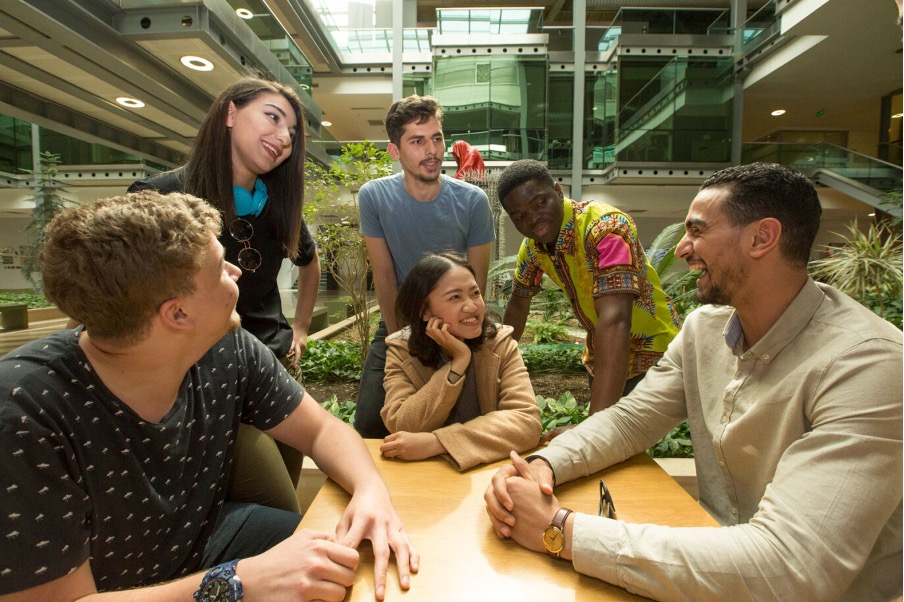
Cybersecurity needs a diverse and inclusive workforce with respect to the sophisticated threats. In this vein, CyberMACS boasts a diverse cohort of 25 students, 16 males and 9 females, representing 16 nationalities in the first intake. This international mix enriches the programme’s experience, fostering multicultural perspectives among all participants.
SUCCESSFUL CULTURAL ORIENTATION AND JOINT INTEGRATION WEEKS
CyberMACS recently conducted two significant event series, the Cultural Orientation Week and the Joint Integration Week, setting the stage for a vibrant academic journey for its first students.
Cultural Orientation Week: The event included cultural exploration with city tours to historic sites of Istanbul like Hagia Sophia and the Grand Bazaar, immersing students in Turkish culture.
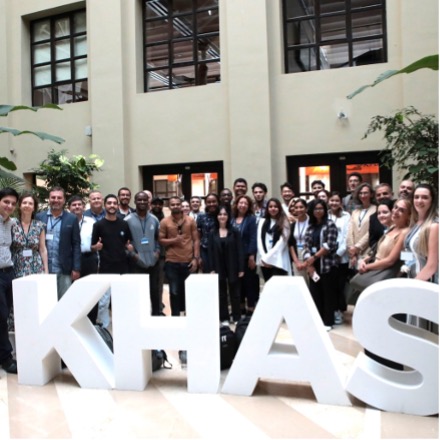
Joint Integration Week: This programme brought together around 60 participants. Distinguished speakers from industry and academia discussed various aspects of cybersecurity, including digital trust, cybersecurity certification, legal aspects of cybersecurity, and more. Interactive working group sessions on cybersecurity pilot cases provided students hands-on experience on real-world cybersecurity challenges, and the week concluded with student group presentations.
ENGAGEMENT WITH SENIOR EXPERTS IN CYBERSECURITY
The Joint Integration Week featured associate partners and renowned speakers who shared their expertise in cybersecurity trends, enriching the program with diverse perspectives. Notable speakers included Dr. Knud Brandis (Ernst & Young, Germany), Prof. Dr Jeanne Pia Mifsud Bonnici (Groningen University), Prof. Dr Berk Canberk (Edinburgh Napier University), Prof. Dr. Boro Jakimovski (Inteligenta/UKIM), Kubilay Onur Güngör (Cyber Struggle), Erdem Kayar (Lostar), and Yalçın Gerek (Tacas).
CyberMACS is more than an educational program; it is a mission to train future-ready experts capable of addressing tomorrow’s cybersecurity challenges.
OTHER INTERNATIONAL COLLABORATIONS
The Kadir Has University Center and Women’s Studies Research Center have successfully concluded the Systematic Action for Gender Equality (SAGE) project, collaborating within a consortium that includes seven universities from across Europe.
Presently, the Center and Women’s Studies Research Center are spearheading the GenderEX: Gender for Excellence in Research in partnership with three esteemed international institutions. GenderEX is a project strategically designed to foster networking, knowledge exchange, and the implementation of best practices to promote the integration of the Sex and Gender Dimension in Research Content (SGDRC). This collaboration involves the Gender and Women’s Studies Research Center at Kadir Has University (GWSRC-KHAS) in Turkey, along with three renowned international partners in this field: the University of Lund (Sweden), the University of Genoa (Italy), and Technological University Dublin (Ireland).
Kadir Has University is the academic partner of the UEFA Football Law Programme (UEFA FLP). The UEFA Football Law Programme (UEFA FLP) is specifically designed for legal professionals who wish to keep up to date with the latest developments in football law and to broaden their understanding of relevant topics.
The program comprises four week-long sessions, which address key issues and topical aspects of football law. It has been developed by UEFA in close cooperation with internationally renowned academic experts and practitioners. Detailed explanations can be found in the UEFA Academy program catalog.
CROSS-SECTORAL DIALOGUE
Kadir Has University’s Center of Energy and Sustainable Development serves as a prominent exemplar of fostering cross-sectoral dialogue through its series of Energy and Climate Conversations.
The reports produced by the Center and Women’s Studies Research Center, which shed light on the experiences of LGBTI employees in public and private sectors, stand as a prime illustration of cross-sectoral dialogue in terms of gender equality.
Additionally, the Center and Women’s Studies Research Center have published the “Gender Equality Action Plan Toolkit for Institutional Change“, a comprehensive guide tailored to facilitate profound transformation towards gender equality within a diverse array of organizations and corporations spanning multiple industries and sectors.
“BUDGET IT – Building Gender Equality through Gender Budgeting for Institutional Transformation”
– Prof. Dr. Mary Louise Şimşek
BUDGET-IT aims to strengthen inclusive gender+ equality using “gender+ budgeting”. Our university will coordinate a consortium of nine institutions in the three-year project that aims to transform institutions in this way.
With the support of leading universities in Italy and Spain, the project aims to increase inclusiveness and research excellence in universities in Bosnia, Serbia and Turkey, in the context of the European Union’s enlargement policies.
By the end of the project, partner organizations will have produced an integrated and inclusive gender+ equality plan and gender+ budget (GEP-GB). The 36-month project has a total budget of EUR 999,235. Kadir Has University’s budget is 260.518 EUR.
KHAS Gender and Women’s Studies UAM Project Manager Dr. Selma Değirmenci, Core Program Faculty Members Dr. Nurseli Yeşim Sünbüloğlu and Dr. Doğu Durgun, and Faculty of Law Faculty Member Assoc. Prof. Dr. Olgun Akbulut take part in the project.
| Participating Organisation Legal Name | Country | Role Action |
| KADIR HAS UNIVERSITESI | Turkey | Coordinator |
| MALTEPE MUNICIPALITY | Turkey | Partner |
| UNIVERZITET-SARAJEVSKA SKOLA ZA NAUKU I TEHNOLOGIJU PU | Bosnia and Herzegovina | Partner |
| COMUNE DI BRESCIA | Italy | Partner |
| UNIVERSITA DEGLI STUDI DI BRESCIA | Italy | Partner |
| University of Belgrade Faculty of Law | Serbia | Partner |
| UNIVERSIDAD DE ALICANTE | Spain | Partner |
| Municipality of Stari Grad | Serbia | Partner |
| Ayuntamiento de Novelda | Spain | Partner |