Public access to museums
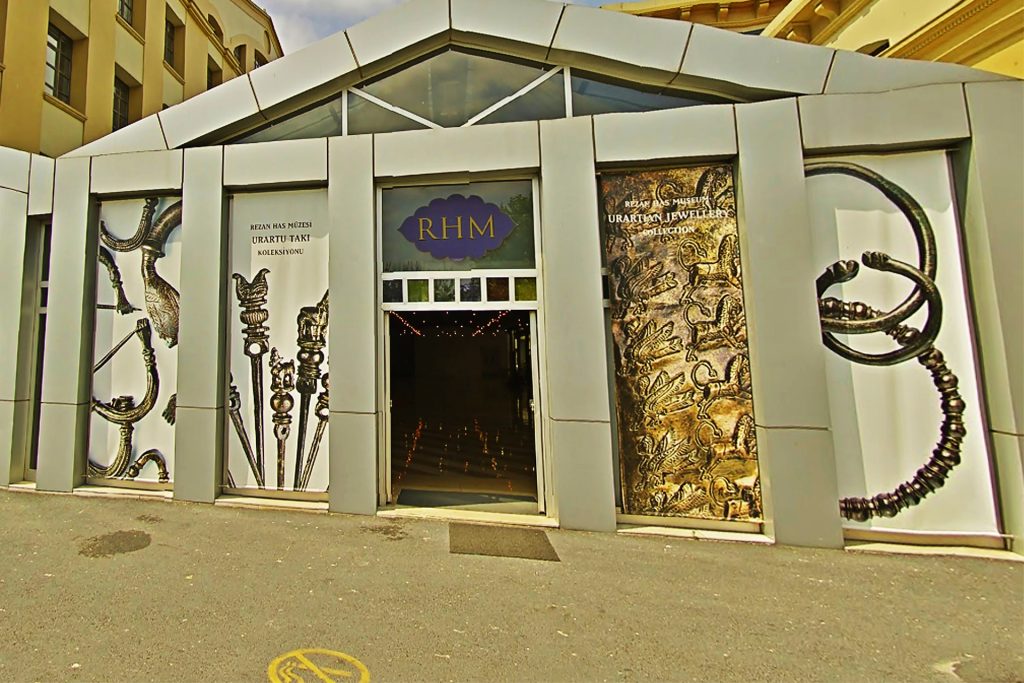
Located within Kadir Has University’s Cibali Campus on the shores of the Golden Horn, the Rezan Has Museum stands as a bridge between Istanbul’s ancient past and its contemporary academic life. Open to the public since May 2007 with its inaugural exhibition “Timeless Simplicity” during the 11th International Conference on Oriental Carpets, the Museum has since become an active cultural center hosting original exhibitions, research events, and art programs.
The Museum’s permanent collection dates back nearly 9,000 years, featuring artifacts from Anatolia’s prehistoric and classical civilizations. In 2009, the collection expanded to include documents and industrial objects from the Cibali Tobacco Factory, enriching its narrative of Istanbul’s urban and industrial transformation. Within its exhibition space lie two remarkable archaeological structures that connect visitors directly with the city’s layered heritage: an 11th-century Byzantine water cistern (the Seferikos Cistern) and the remains of a 17th-century Ottoman structure believed to have been used for water management.
The Byzantine cistern, built from stone, terracotta bricks, and lime mortar, consists of 48 arches, 15 piers, and 20 columns—some displaying capitals from different Byzantine periods. After losing its original function, the cistern served successively as a tobacco warehouse and later as a food storage depot during World War II. The adjoining Ottoman-era structure adds another layer to this complex history, reflecting the continuity of Istanbul’s water and urban systems through the centuries.
Today, the Rezan Has Museum welcomes thousands of visitors each year and plays a vital role in public education, inclusivity, and cultural preservation. It operates under an open-access policy, inviting both the University community and the general public to explore its exhibitions, archaeological remains, and educational programs. It is open daily from 09:00 to 18:00, except on the first day of religious holidays and January 1st, offering free and appointment-based entry for individuals, school groups, and researchers.
In line with Kadir Has University’s commitment to accessibility, the Museum provides physical access through a dedicated elevator for visitors with mobility limitations, ensuring that individuals with disabilities or difficulty using stairs can comfortably reach all exhibition areas.
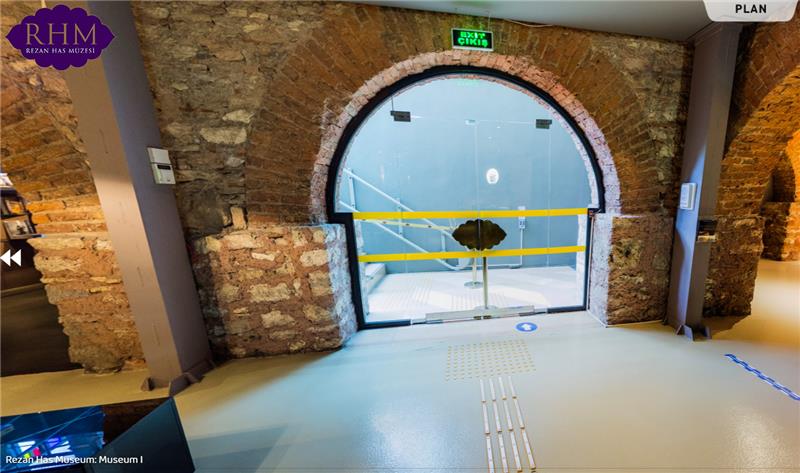
Additionally, for visitors who cannot physically access the Museum, a virtual tour platform has been designed and made publicly available online, allowing everyone to explore the Museum’s collections, archaeological sites, and historical architecture remotely. Please click here for the tour: https://www.rhm.org.tr/sanaltur/en.html
Easily reachable by public transport via the İstanbul Metropolitan Municipality’s IETT “Nasıl Giderim” route planner, the Museum ensures convenient entry for all. Its location—Kadir Has University, Cibali Mah. Kadir Has Cad. 34083 Fatih, Istanbul—places it in one of the city’s most historically significant districts, where culture, archaeology, and education meet.
By maintaining comprehensive public access—both physical and digital—to its collections, archaeological heritage, and historic architecture, Kadir Has University affirms its role as a guardian of Istanbul’s tangible and intangible heritage, transforming its campus into a living museum that connects the past, present, and future of cultural sustainability.
For more information: https://www.rhm.org.tr/en/visit/
The museum organized 1 seminar, 6 panels, 1 children’s workshop, and 2 guided tours within the framework of INRAP’s European Archaeology Days. Together with its newly launched selection, these events reached a total of 4,344 people. Over the course of the academic year, the museum welcomed 15,103 visitors.
For Kadir Has University students and staff, the museum conducted 7 guided tours, 5 adult workshops, and 4 workshops within summer and winter school programs, hosting a total of 53 participants.
Through its updated websites — www.kayipdiller.com and www.rhm.org.tr — as well as its presence on Sketchfab and Google Arts & Culture, the museum reached 49,543 online visitors. Social media and YouTube announcements further extended its outreach to approximately 77,000 people.
In accordance with the regulations of the Ministry of Culture and Tourism, the museum offered free admission every Thursday for all students and on designated days for all visitors. Within this framework, 6,281 visitors from 162 educational institutions and 449 visitors from 18 community groups of various age categories were hosted free of charge.
Rezan Has Museum has also made significant contributions to academic research. Three researchers from different institutions studied three distinct archaeological artifacts from the museum’s collection for their academic work. Additionally, one researcher used seven photographs from the Cibali Tobacco Factory Album in educational videos.
Within the scope of international academic collaborations, the museum supported several foreign researchers by providing access to museum publications, online exhibition materials, and visual resources. One researcher received photographs from the Cibali Tobacco Factory Album, and another was provided with a visual from the online exhibitions. Furthermore, a researcher from Slovenia visited the museum to study artifacts and is currently preparing an academic project based on this research.
Conservation and restoration work continued intensively in the museum’s two restoration laboratories, resulting in 22 restored artifacts being added to the museum inventory this year.
Rezan Has Museum continues to attract great interest from university students and staff, local residents, children, researchers, and art and culture enthusiasts. Through its contributions to culture, art, and archaeology, the museum continues to generate value for both the city and the academic community.
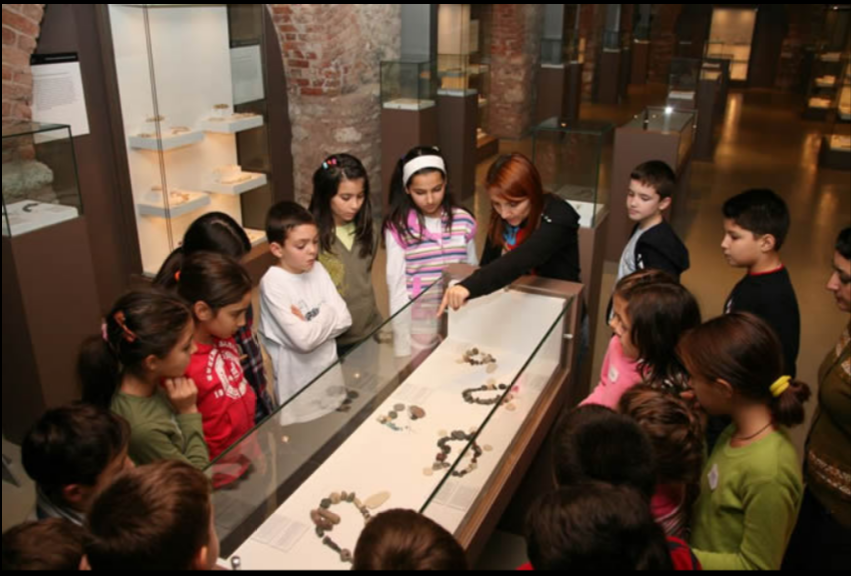
Children’s Education Programme
Workshop programs held at the Rezan Has Museum with the participation of the children aims to develop the children’s artistic creativity, have the children recognize world cultures and universality of art, develop their production and experimentation capacities, design by being inspired form their own feelings, giving information on the historical structure of the exhibited art pieces and visit museums as a habit.
Children Books Provided by the Museum
Once Upon a Time Hasankeyf Sibel Sonmaz History book prepared for children describing Hasankeyf, which is the only place in the world capable of providing nine of the UNESCO’s “World Heritage” criterion by having both natural wealth and history of a15 thousand years. 24 Pages, Turkish, May 2010 ISBN: 978-975-8919-58-1
Once Upon a Time Haliç Sibel Sonmaz Haliç which is one of the world’s oldest places of inhabitancy of the world was known as Golden Horn (khrysokeras) in the ancient periods. This book is prepared to teach children about Golden Horn and it’s past. 24 Pages, Turkish, October 2008 ISBN: 975-8919-41-5
Once Upon a Time Bead Sibel Sonmaz 16 page training book, especially prepared for children for the exhibition called “Bead from Collection to Creation” explaining the history, development and usage areas of beads. 16 Pages, Turkish, January 2008 ISBN: 978-975-8919-33-8