Education for SDGs: Specific Courses on Sustainability
COURSES RELATED TO SUSTAINABILITY AND SUSTAINABLE DEVELOPMENT GOALS
Core Program
The Core Program (Common Courses Department) is designed to unite all KHAS students of different departments with different competencies around a common academic curriculum in the semester of their education.
Core Program contributes to achieving the sustainable development goals (SDGs) through its goals, aims, and educational approach. The program is designed to equip students with knowledge, skills, and values contributing to a peaceful and sustainable world. The compulsory and elective courses, offered in the fall and spring semesters, integrate various topics into their curriculum to increase students’ awareness of poverty, hunger, food insecurity, environmental pollution, gender inequality, energy inefficiency, unemployment, unhealthy work conditions, industrialization, global production and consumption patterns, uncontrolled urbanization, problems about growth, and income inequality within and among the countries, as well as the solutions that people and societies have introduced to overcome these challenges. The courses delve into historical, social, political, economic, and cultural aspects of these challenges and solutions. In encouraging interdisciplinary and multilevel analyses, the courses provide analytical and critical perspectives that would enable students to think about the causes, evolution, and transformation of these complex processes and to seek solutions to mitigate their impact on the present and future of the world.
Our aim is not only to equip students with intellectual knowledge but also to stress their agency and ethical responsibility in an interdependent world. The courses underline the role that we play in shaping and reshaping these processes as entrepreneurs, professionals, consumers, and citizens and foster a critical and self-reflexive perspective that encourages students to use this knowledge and expertise in their future careers. Whereas some courses are entirely designed to enable a creative, participatory, and meaningful engagement of the students with these challenges, others integrate this goal in their classroom settings, learning outcomes, and assessment and evaluation criteria that push students to think individually and as a group on particular cases. Our approach is based on an inclusive and equitable education, in which students are not passive recipients of information but active participants who learn how to find reliable information, analyze the data, and use it for specific purposes. The courses are cooperative efforts of instructors and students and are continuously evaluated and reshaped with the feedback we receive from each group.
Core Program’s purpose, philosophy, and operational structure inherently support the achievement of the SDGs by disseminating awareness of the key aspects of the SDGs, fostering ethical responsibility that would guide the students’ lifelong conduct, enabling student participation in learning processes, and equipping students with knowledge, expertise, and skills to overcome the challenges to the SDGs.
Kadir Has University Core Program aims to provide students with a universal vision regarding sustainability and SDGs. Some of these courses can be seen below:
Compulsory Courses
HST 101 and HST 102 History of Modern Turkey
SDG 1: NO POVERTY
While the KHAS101 Origins and Consequences course examines what kinds of beneficial results inventions in different fields of science have brought to humanity, especially the Everyday Technologies: Quantum Age and Blueprints of Life modules encourage students to think about what can be done to end poverty. Students examine the subject in depth by writing research papers on topics of their choice.
SDG 2: ZERO HUNGER
While the KHAS101 Origins and Consequences course examines what kinds of beneficial results inventions in different fields of science have brought to humanity, especially the Everyday Technologies: Quantum Age and Blueprints of Life modules encourage students to think about what can be done to end hunger. Students examine the subject in depth by writing research papers on topics of their choice.
SDG 3: GOOD HEALTH AND WELL-BEING
While the KHAS101 Origins and Consequences course examines what kinds of beneficial results inventions in different fields of science have brought to humanity, especially the Everyday Technologies: Quantum Age and Medicine and Quality of Life modules encourage students to think about what can be done for good health and well-being. Students examine the subject in depth by writing research papers on topics of their choice.
SDG 4: QUALITY EDUCATION
The KHAS101 Origins and Consequences course aims to provide quality education that improves students’ reading, research, understanding, writing, and presentation skills—away from memorization—by addressing different fields of science through a project-based learning system taught by expert instructors.
SDG 6: CLEAN WATER AND SANITATION
While the KHAS101 Origins and Consequences course examines what kinds of beneficial results inventions in different fields of science have brought to humanity, especially the Everyday Technologies: Quantum Age and Medicine and Quality of Life modules encourage students to think about what can be done for clean water and sanitation. Students examine the subject in depth by writing research papers on topics of their choice.
SDG 7: AFFORDABLE AND CLEAN ENERGY
While the KHAS101 Origins and Consequences course examines what kinds of beneficial results inventions in different fields of science have brought to humanity, especially the Everyday Technologies: Quantum Age module encourages students to think about what can be done for affordable and clean energy. Students examine the subject in depth by writing research papers on topics of their choice.
SDG 9: INDUSTRY, INNOVATION AND INFRASTRUCTURE
While the KHAS101 Origins and Consequences course examines what kinds of beneficial results inventions in different fields of science bring to humanity, it encourages students to think about how the knowledge produced in various scientific disciplines is reflected in industry as innovation, through modules on Astronomy, Quantum, Genetics, and Chemistry/Medicine. Students examine the subject in depth by writing research papers on topics of their choice.
SDG 11: SUSTAINABLE CITIES AND COMMUNITIES
While the KHAS101 Origins and Consequences course examines what kinds of beneficial results inventions in different fields of science have brought to humanity, especially the Everyday Technologies: Quantum Age and Medicine and Quality of Life modules encourage students to think about what can be done to keep the impact of urbanization on the world and the environment at a sustainable level. Students examine the subject in depth by writing research papers on topics of their choice.
SDG 13: CLIMATE ACTION
While the KHAS101 Origins and Consequences course examines what kinds of beneficial results inventions in different fields of science have brought to humanity, especially the A Short Journey from the Big Bang to Now, Everyday Technologies: Quantum Age, and Medicine and Quality of Life modules encourage students to think about what can be done to keep humanity’s impact on the climate at a sustainable level. Students examine the subject in depth by writing research papers on topics of their choice.
SDG 14: LIFE BELOW WATER
While the KHAS101 Origins and Consequences course examines what kinds of beneficial results inventions in different fields of science have brought to humanity, the Blueprints of Life module encourages students to think about what can be done to keep humanity’s impact on life below water at a sustainable level. Students examine the subject in depth by writing research papers on topics of their choice.
SDG 15: LIFE ON LAND
While the KHAS101 Origins and Consequences course examines what kinds of beneficial results inventions in different fields of science have brought to humanity, the Blueprints of Life module encourages students to think about what can be done to keep humanity’s impact on life on land at a sustainable level. Students examine the subject in depth by writing research papers on topics of their choice.
SDG 17: PARTNERSHIPS FOR THE GOALS
While the KHAS101 Origins and Consequences course examines what kinds of beneficial results inventions in different scientific fields bring to humanity, it encourages students to think about how studies in different scientific fields can be used together in an interdisciplinary manner. By conducting group research assignments on topics of their choice, students examine the subject in depth and strengthen their teamwork skills.
SDG 1: NO POVERTY
In the Ecological Crisis and Coexistence of Multispecies module of the KHAS 105 Universal Values and Ethics course, environmental problems are examined in the context of social justice. Students learn to view environmental issues through an intersectional lens and question how poverty and ecological degradation reinforce one another. In the Bioethics module, students also discuss technologies related to genetically modified organisms, focusing on the ethical dimensions of food and agricultural technologies made possible by genetic interventions in response to population growth and global poverty.
SDG 2: ZERO HUNGER
In the Ecological Crisis and Coexistence of Multispecies module, students explore global food security within the broader context of the ecological crisis and discuss possibilities for building a sustainable food industry. The Bioethics module complements this by examining the ethics of genetically modified organisms and the implications of biotechnological interventions in agriculture as a response to population growth and hunger.
SDG 3: GOOD HEALTH AND WELL-BEING
In the Ecological Crisis and Coexistence of Multispecies module of KHAS 105 Universal Values and Ethics, students reflect on the possibilities and limitations of maintaining a healthy and high-quality life amid ecological challenges. The Bioethics module extends this discussion to the ethical implications of using biotechnology to enhance human health and well-being, including topics such as human-computer integration and genetic interventions to prevent disease.
SDG 4: QUALITY EDUCATION
Within the KHAS 105 Universal Values and Ethics course, students are expected to:
- Demonstrate high awareness of universal values and assess the personal and social responsibilities that come with living in a diverse world.
- Understand the importance of developing objective perspectives independent of others’ opinions or judgments.
- Use analytical and discursive tools effectively to respond creatively and critically to contemporary ethical issues.
- Distinguish between scientific and popular texts through critical evaluation.
- Question personal beliefs and biases in a reflective and constructive way.
- Recognize nuances in language use and identify manipulative or misleading discourse.
SDG 5: GENDER EQUALITY
The Gender and Diversity module introduces key gender concepts and explores their complexities. Students examine the varied experiences of women, men, and LGBTI+ individuals, learning to identify different forms of gender-based violence and inequality. The module highlights how gender, sexuality, and identity intersect with other social categories such as ethnicity, race, and class, and encourages students to engage in active classroom discussions on related topics.
SDG 6: CLEAN WATER AND SANITATION
Through the Ecological Crisis and Coexistence of Multispecies module, students explore the global water crisis as part of the ecological crisis and analyze its social, political, ecological, and economic dimensions.
SDG 7: AFFORDABLE AND CLEAN ENERGY
In the Ecological Crisis and Coexistence of Multispecies module, students gain awareness of the global energy crisis, learning about its ecological, political, social, and economic dimensions within the context of sustainability.
SDG 8: DECENT WORK AND ECONOMIC GROWTH
In the Ecological Crisis and Coexistence of Multispecies module, students develop a critical perspective on the concept of economic growth within the framework of the ecological crisis and question the possibilities of achieving a sustainable economy.
SDG 10: REDUCED INEQUALITIES
The KHAS 105 Universal Values and Ethics course helps students develop awareness of inequalities based on gender, race, language, religion, and class, fostering a critical understanding of social justice and inclusion.
SDG 11: SUSTAINABLE CITIES AND COMMUNITIES
Within the Ecological Crisis and Coexistence of Multispecies module, students examine sustainability in the context of urbanization and the ecological crisis, questioning the potential for creating truly sustainable cities and communities.
SDG 12: RESPONSIBLE CONSUMPTION AND PRODUCTION
In the Ecological Crisis and Coexistence of Multispecies module, students engage critically with the concepts of production and consumption, exploring possibilities for responsible and sustainable models within the global ecological framework.
SDG 13: CLIMATE ACTION
The Ecological Crisis and Coexistence of Multispecies module encourages students to critically analyze the concepts of climate crisis and climate justice, examining the possibilities for effective climate action at individual, national, regional, and international levels.
SDG 14: LIFE BELOW WATER
In the Bioethics and Ecological Crisis and Coexistence of Multispecies modules, students discuss the coexistence of species and the significance of aquatic ecosystems in the ecological crisis. Topics such as sustainable use of marine resources and protection of water-based ecosystems are explored.
SDG 15: LIFE ON LAND
In the Bioethics and Ecological Crisis and Coexistence of Multispecies modules, students explore biodiversity, nonhuman life forms, and ethical considerations surrounding animals used for food, focusing on the sustainable coexistence of all species on land.
KHAS 105 Universal Values and Ethics
SDG 1: NO POVERTY
In the Ecological Crisis and Coexistence of Multispecies module of our KHAS 105 Universal Values and Ethics course, environmental problems are examined in the context of social justice. Students gain a perspective in which they consider environmental issues from an intersectional lens and question how poverty and environmental problems reinforce each other. In the Bioethics module, technologies related to genetically modified organisms are discussed. Within this context, the ethical dimensions of food and agricultural technologies made possible by genetic interventions—particularly in response to global population growth and the poverty it generates—are examined.
SDG 2: ZERO HUNGER
In the Ecological Crisis and Coexistence of Multispecies module, students study food security in the context of the ecological crisis and discuss the possibilities of creating a sustainable food industry. In the Bioethics module, the topic of genetically modified organisms is also addressed, focusing on the ethical dimensions of food and agricultural technologies made possible by genetic interventions in response to population growth and global hunger.
SDG 3: GOOD HEALTH AND WELL-BEING
In the Ecological Crisis and Coexistence of Multispecies module of KHAS 105 Universal Values and Ethics, students explore the possibilities and limitations of achieving a healthy and quality life in the context of ecological crisis. In the Bioethics module, students discuss the ethical implications of using biotechnology to improve human cognitive and physical well-being. These discussions span a wide range—from human-computer integration to genetic interventions designed to prevent disease—highlighting approaches to good health and well-being.
SDG 4: QUALITY EDUCATION
Within the KHAS 105 Universal Values and Ethics course, students are expected to:
- Demonstrate strong awareness of universal values and evaluate the personal and social responsibilities that come with living in a diverse world.
- Show understanding of the importance of forming objective perspectives independent of others’ opinions or judgments.
- Use analytical and discursive tools effectively to respond creatively and critically to current ethical dilemmas.
- Distinguish between scientific and popular texts through critical evaluation.
- Question personal beliefs and prejudices in a reflective manner.
- Demonstrate competence in recognizing nuances in language and identifying manipulative discourse.
SDG 5: GENDER EQUALITY
The Gender and Diversity module introduces fundamental gender concepts and explores their complexities. It highlights differences in the lived experiences of women, men, and LGBTI+ individuals, while enabling students to identify different forms of gender-based violence and understand how these are linked to structural inequalities. The module further examines how sexuality, gender identity, and expression intersect with other social categories such as ethnicity, race, and class, and encourages open classroom discussion on related issues.
SDG 6: CLEAN WATER AND SANITATION
In the Ecological Crisis and Coexistence of Multispecies module of KHAS 105 Universal Values and Ethics, students examine the global water crisis within the framework of the ecological crisis, learning about its social, ecological, political, and economic dimensions.
SDG 7: AFFORDABLE AND CLEAN ENERGY
Through the Ecological Crisis and Coexistence of Multispecies module, students gain awareness of the global energy crisis in the context of ecology and analyze its social, political, environmental, and economic implications.
SDG 8: DECENT WORK AND ECONOMIC GROWTH
In the Ecological Crisis and Coexistence of Multispecies module, students develop a critical perspective on economic growth within the framework of the ecological crisis and question the possibilities of achieving a sustainable economy.
SDG 10: REDUCED INEQUALITIES
In the KHAS 105 Universal Values and Ethics course, students gain awareness of inequalities based on gender, race, language, religion, and class, developing a critical perspective toward social and economic disparities.
SDG 11: SUSTAINABLE CITIES AND COMMUNITIES
In the Ecological Crisis and Coexistence of Multispecies module, students explore the concept of sustainability in relation to the ecological crisis, questioning the possibilities of developing sustainable and inclusive cities.
SDG 12: RESPONSIBLE CONSUMPTION AND PRODUCTION
Within the Ecological Crisis and Coexistence of Multispecies module, students analyze the concepts of production and consumption through a critical lens, exploring potential pathways toward sustainable and responsible economic models.
SDG 13: CLIMATE ACTION
In the Ecological Crisis and Coexistence of Multispecies module, students develop a critical understanding of the climate crisis and climate justice, examining the potential for meaningful climate action at the individual, national, regional, and international levels.
SDG 14: LIFE BELOW WATER
In the Bioethics and Ecological Crisis and Coexistence of Multispecies modules, students discuss the coexistence of species and the importance of marine ecosystems within the context of ecological crisis. Topics include sustainable use of water resources, preservation of biodiversity, and ecosystem services.
SDG 15: LIFE ON LAND
In the Bioethics and Ecological Crisis and Coexistence of Multispecies modules, students address biodiversity, nonhuman life, and ethical questions surrounding animals consumed as food. Discussions focus on the sustainable coexistence of all species and the ethical responsibilities of humanity toward life on land.
KHAS 110 Civic Responsibility Project Course
SDG 1: NO POVERTY
Within the scope of the KHAS 110 Civic Responsibility Project course, a partnership was established with the Basic Needs Association (TİDER) to support disadvantaged groups. Through this collaboration, students volunteered in food banks, which serve as community markets where individuals in need can access food, clothing, stationery, and other essential products to meet their monthly needs. Students took on various roles in these food banks, providing operational support and contributing to social solidarity efforts.
SDG 2: ZERO HUNGER
As part of the KHAS 110 Civic Responsibility Project course, students collaborated with the Basic Needs Association (TİDER) to assist food banks that provide essential supplies to those in need. Additionally, students supported the Çorbada Tuzun Olsun Association, which distributes soup daily to the homeless. Through active participation in these initiatives, students contributed to combating hunger and promoting food security within vulnerable communities.
SDG 4: QUALITY EDUCATION
In collaboration with the Bütün Çocuklar Bizim Association (BÇBD), students participated in activities designed to support the education and development of disadvantaged children. They worked with students from Kırımlı Aslanbey Primary School, including immigrant students, through interactive events such as origami workshops, museum visits, film screenings, and book reading sessions aimed at enhancing communication and social skills.
Furthermore, students partnered with the Istanbul Metropolitan Municipality Neighborhood Houses, which provide educational and developmental opportunities for people of various age groups. KHAS students assisted in lessons for younger participants, organized games, and supported community events for adults.
Another collaboration was carried out with the Educational Volunteers Foundation of Türkiye (TEGV), where students provided online tutoring and mentorship to children in need, contributing to equal access to quality education.
SDG 5: GENDER EQUALITY
Within the KHAS 110 Civic Responsibility Project course, students worked in partnership with the Activism Club, one of KHAS’s student organizations, to raise awareness about gender equality on campus. They organized a “Gender Myths Workshop”, facilitated discussions among students, and contributed to the initiative of creating gender-neutral restrooms at the university. Another student group carried out an original project focusing on women’s sexual health awareness, addressing the lack of accessible information on this subject. At the end of the semester, they published an online dictionary containing reliable information on related health topics.
SDG 10: REDUCED INEQUALITIES
A collaboration with the Bütün Çocuklar Bizim Association (BÇBD) allowed KHAS students to support educational programs designed for primary school children lacking equal learning opportunities.
Another partnership was established with Wikimedia, where students contributed to the global free encyclopedia initiative by conducting research, creating visual materials, and promoting access to accurate information. This effort helped reduce informational inequality and support the democratization of knowledge.
Students also collaborated with the Istanbul Metropolitan Municipality Neighborhood Houses, organizing events particularly for disadvantaged women’s groups to address educational and social inequalities. Through another partnership with TEGV, students provided online tutoring to help reduce inequalities in educational access.
SDG 11: SUSTAINABLE CITIES AND COMMUNITIES
Students collaborated with the Istanbul Metropolitan Municipality City Council to strengthen communication between citizens and local government. They participated in organizing public meetings and community activities, culminating in a “Participation Café” panel that brought together local residents to discuss accessibility to culture and the arts.
A student group named Resif 34 carried out activities to raise awareness about pollution in the Bosphorus, preparing informative materials and organizing a sea-cleaning event with the support of the Istanbul Metropolitan Municipality. Other project groups conducted educational campaigns on environmental pollution and organized a forest-cleaning event, encouraging community engagement in sustainability and recycling.
SDG 14: LIFE BELOW WATER
Under the KHAS 110 Civic Responsibility Project course, the Resif 34 student group focused on raising awareness of marine pollution in the Bosphorus. They conducted public awareness campaigns on how human behavior affects aquatic ecosystems and organized a sea-cleaning event in cooperation with the Istanbul Metropolitan Municipality, contributing directly to marine sustainability.
SDG 15: LIFE ON LAND
Student groups implemented various initiatives focusing on animal welfare and environmental protection. One group organized an event providing food and shelter for stray animals, while another focused on improving conditions for campus cats. Additionally, students conducted awareness campaigns on environmental pollution and organized a forest-cleaning event at the end of the semester to emphasize the importance of preserving biodiversity and protecting life on land.
SDG 17: PARTNERSHIPS FOR THE GOALS
The KHAS 110 Civic Responsibility Project course promotes civic engagement by combining theoretical knowledge with practical community service. The course encourages students to design and implement projects addressing social, environmental, and cultural needs, transforming awareness into active citizenship.
To achieve these goals, KHAS established partnerships with various non-governmental organizations and local institutions, including:
- Bütün Çocuklar Bizim Association (BÇBD)
- Basic Needs Association (TİDER)
- Wikimedia
- Istanbul Metropolitan Municipality City Council
- Istanbul Metropolitan Municipality Neighborhood Houses
- Educational Volunteers Foundation of Türkiye (TEGV)
- Kadir Has University student clubs (Social Unity and Support Club, Activism Club)
Through these collaborations, students developed empathy, leadership, and problem-solving skills, while contributing meaningfully to sustainable social development and community well-being.
TLL 101 & TLL 102 Critical Reading and Writing in Turkish
SDG 4: QUALITY EDUCATION
This course aims to strengthen students’ ability to express themselves effectively, both orally and in writing, in their daily and academic lives. It enables them to understand and analyze argument-based texts of varying complexity and to produce critical and reflective written and verbal responses.
Within the scope of the course, students are encouraged to express their ideas and arguments individually or in group discussions, adhering to principles of respectful and constructive debate. They also learn to access and evaluate reliable printed, digital, and visual resources for academic research, while consistently applying academic integrity and ethical writing practices in all their work.
Rather than following a traditional lecture format, the course functions as an interactive reading and writing workshop, where students engage with selected texts through discussion, commentary, and critique—both individually and collaboratively. Students frequently exchange feedback on each other’s work, which helps them develop critical thinking, analytical reading, and effective communication skills.
SDG 5: GENDER EQUALITY
Gender equality is one of the central themes of the TLL 101 and TLL 102 courses. In TLL 101, two weeks of the course are specifically dedicated to this topic. During the first week, students are introduced to theoretical frameworks and key readings on gender, supported by real-life examples and case analyses. In the second week, students work in groups to deliver oral presentations based on critical media analyses of advertisements and news content focused on gender representation and equality. Students may also select gender-related themes as discussion or writing topics in subsequent weeks.
In TLL 102, which explores novels and short stories from the pre-Republican period to the present, gender equality continues to serve as a major focal point. Students critically examine how men and women are represented in literary works, identifying underlying assumptions and social messages. To enrich these discussions, two guest speakers were invited during the semester: Selman Nacar, who delivered a talk on his film Between Two Dawns (İki Şafak Arasında) on April 27, and Latife Tekin, who led a conversation on her novel Manves City on May 26. These sessions provided students with deeper insights into gender representation, narrative structure, and social critique in contemporary Turkish literature and cinema.
Elective Courses
Course Code | Course Name | Related SDGs |
KHAS 1228 | SDG 13, SDG 7; SDG 4 | |
KHAS 1226 | SDG 13, SDG 5; SDG 4; SDG 15 | |
KHAS 1726 | SDG 13; SDG 17 | |
KHAS 1300 | SDG 5; SDG 4 | |
KHAS 1302 | SDG 5; SDG 4 | |
KHAS 1222 | SDG 3, SDG 2; SDG 4 | |
KHAS 1422 | SDG 9 | |
KHAS 1426 | SDG 9; SDG 11 | |
KHAS 1224 | SDG 1, SDG 7; SDG 4 | |
KHAS 1616 | SDG 16 | |
KHAS 1708 | SDG 16 | |
KHAS 1720 | SDG 16 | |
KHAS 1700 | SDG 10; SDG 13; SDG 17 | |
KHAS 1714 | SDG 10; SDG 13; SDG 12 | |
KHAS 1704 | SDG 10; SDG 8 | |
KHAS 1206 | SDG 10; SDG 15 | |
KHAS 1312 | SDG 10; SDG 4 | |
KHAS 1320 | SDG 10; SDG 4 | |
KHAS 1730 | SDG 12 | |
KHAS 1208 | Diet for a Small Planet: Eating as if the World Depended On It | SDG 11, SDG 3, SDG 4 |
KHAS 1216 | Re-naturing The City: Looking at The City From The Lens of Political Ecology | SDG 11; SDG 4 |
KHAS 1200 | SDG 3, SDG 4 |
Social responsibility projects initiated by Kadir Has University faculties and departments, student clubs, students and graduates form another indispensable source of outreach activities. As part of the KHAS New Education Model, students of Core Program take civic responsibility courses (KHAS 110 Civic Responsibility Project & KHAS 120 Civic Responsibility Project for International Students). In these courses, core program students design and implement social responsibility projects to reach out to various communities and publics with the aim of positive social change.
NGOs with which protocols were signed and project contents:
All Children Are Ours Association (2023-2024 academic years)
Within the scope of the cooperation developed with the association, the students carried out activities for Fatih Kırımlı Aslanbey Primary School 1st-4th grade students in Fener. Working groups were formed and paired with a primary school branch and the students met with children from the branch they were paired with in their fortnightly field studies. In some weeks, in-class activities were organised in the primary school (Dodo Reads Books, Dodo Tells Tales, origami, playground painting, free play hours in the school garden), while in other weeks, students from the primary school came to the university accompanied by their teachers and participated in the activities organised by the students taking the course at the university (film screenings in the school cinema hall, a visit to the Rezan Has Museum, origami exhibition). In addition, books for children were collected from the “book tree” established at the university and donated to the primary school. Before the fieldwork started, an expert psychologist from the association gave online trainings to the students on communicating with children, effective reading techniques, and body language.
Istanbul Metropolitan Municipality Directorate of Urban Planning – Beyoğlu Senin project (2023-2024 academic years)
The students contributed to the Beyoğlu Strategy Plan prepared by the Istanbul Metropolitan Municipality Urban Planning Directorate through participatory methods. IBB team stated that they needed youth participation in the study and directed the students to work with young people living in Beyoğlu. It was planned to carry out field studies to determine how young people living in the neighbourhoods of Beyoğlu use Beyoğlu, what their expectations, needs and demands are. Each of the 6 neighbourhoods of Beyoğlu was matched with a student group (Sütlüce-Örnektepe, Okmeydanı-Hasköy, Dolapdere-Tarlabaşı, Kasımpaşa, İstiklal Caddesi-Galata-Karaköy, Tophane-Kabataş-Cihangir). In the first phase of the study, students carried out data collection activities (determining the nursery-schools, primary schools, secondary schools, high schools, universities, research institutes, public urban service areas, private/legal urban service areas in Beyoğlu region and their characteristics). In the second phase of fieldwork, students met with young people aged 14-20 living in Beyoğlu in civil society organisations and conducted in-depth interviews (Sururi Neighbourhood Solidarity, Tarlabaşı Community Centre, Okmeydanı Environmental Protection and Beautification Association, Hasköy Culture House, Örnektepe Neighbourhood House, Bereketzade Muhtarlığı, Beyoğlu Citizen Assembly). Although it was planned to organise a Beyoğlu forum at Kadir Has University within the scope of the Beyoğlu Senin project, it could not be held. The cooperation ended with the finalisation of the IBB Beyoğlu Strategic Plan.
Istanbul Metropolitan Municipality Directorate of Social Services – Neighbourhood Houses (2023-2024 academic years)
In the Neighbourhood Houses established by IBB Social Services Directorate for community empowerment in disadvantaged neighbourhoods of Istanbul, students volunteered and organised activities for children and women. In Örnektepe, Sulukule, Zafer, Cibali Neighbourhood Houses, they carried out free time activities and workshops (lesson support workshop, Papuduk, English support, game workshop). Before the fieldwork of the students, an expert psychologist from IBB provided online trainings to the students on children’s rights to bodily speech and trauma-sensitive volunteering.
Istanbul City Council (2023-2024 academic years)
Within the scope of the cooperation, students proposed and developed projects based on urban commons and participation under the mentorship of İKK and using the facilities of the council. In the first working year, 4 working groups developed projects with 4 different methods and themes: one group carried out focus group studies on Kadir Has University students’ access to culture and arts, one group worked on the urban mobility of students studying in the Golden Horn region, one group carried out a face-to-face leg of the “Participation Café” events organised by İKK in different neighbourhoods of Istanbul to identify and report the demands, expectations and requests of different groups regarding the city, one group carried out a face-to-face leg at IBB Sütlüce facilities for students studying in the Golden Horn region, and one group carried out an online Participation Café event for the same group via the Discord platform. In these activities, in which all groups developed their own working themes and methods, a mentorship model was developed with IKK; in this model, a project coordinator from IKK and a political scientist with expertise in the field of participation were determined as mentors, and these mentors met with the students periodically and gave feedback to their projects. In the second year, student groups were directed to submit project proposals for the “Participatory Budget”, a joint project of the Istanbul City Council and IBB. Citizens residing in Istanbul apply to the Participatory Budget, which aims to plan the IBB budget with a participatory approach, by proposing projects on certain themes; projects that pass a preliminary screening on the applicability of the projects are submitted to a public vote and the selected projects are implemented with the IBB budget. After the 6 February earthquakes, the theme of the Participatory Budget was determined as “disaster resilience” and the students developed their own project proposals with feedbacks under the mentorship of IKK and made their applications at the end of the term. 6 working groups developed different projects on the theme of disaster, such as developing an Istanbul animal disaster action plan and rights-based awareness-raising activities on disasters in the neighbourhood.
Basic Needs Association – TIDER (2023-2024 academic years)
Within the scope of the cooperation with Tider, which has the largest food bank network in Turkey, students carried out volunteer work in Beyoğlu Municipality Food Bank and Şişli Municipality Food Bank as they are close to the university. In these food banks, products that are close to their expiry date but are still healthy to consume, products that are not sold in the market due to reasons such as packaging printing errors, etc., or donated products are delivered free of charge and with a credit system to those in need determined by the social service directorates of local municipalities. The market system enables those in need to obtain the products they want in the quantities they want and to feel better about themselves. In these food banks, student groups carried out field work every two weeks, assisting and guiding those who came, sorting and placing products in the market, and placing the parcels. Some student groups contributed to the distribution of iftar meals at the Embrace Life Association Restaurant and Atlas Aid Association Restaurant. In addition, some student groups coordinated the donation of products (books, food, toys) to Tider in the donation piggy banks within the university.
Educational Volunteers Foundation of Turkey (TEGV) (2023-2024 academic years)
In this digital volunteering project planned for international students, students provided online English support workshops to disadvantaged children and youth in different provinces of Turkey. Before the work, TEGV team provided training on online communication techniques and volunteering for the students. Due to the difficulties of implementing TEGV’s volunteering procedure in the duration and scope of a one-semester course, the project was not continued in 2023-2024.
Wikimedia User Community Group Turkey (WMTR) (2023-2024 academic years)
In collaboration with the WMTR community of volunteer Wikipedists on digital volunteering and open source knowledge production, students created content for Wikipedia, “the free encyclopaedia to which everyone can contribute”, and its sister projects (Wikimedia Commons, Wiktionary, Wikisource, Wikidata). At the beginning of the semester, the WMTR team provided online training on the principles of Wikipedia, how it is used, and digital literacy. Students worked in groups throughout the semester on different topics such as endemic plants of Turkey, Istanbul biennials, independent film festivals in Turkey, nature reserves in Turkey, women writers and artists, and developed Wikipedia articles on these topics.
Within the scope of the course, 510 articles were created, 1120 existing Wikipedia articles were improved, 2170 total edits were made, 89 open source images were added, 4030 references were added.
Khas Social Support and Solidarity Club & Khas Activism Club (2023-2024 academic years)
Within the scope of the course, two student clubs within the university, which are engaged in social benefit-oriented activities, were co-operated with. The clubs provided mentoring support to students who developed their own projects or provided students with the opportunity to develop joint projects in the existing working groups of the clubs (human rights, environment and animal rights working groups were formed). Different projects were developed and implemented, such as collecting and sending donations of books and toys to children in village schools, organising bird house workshops and placing bird houses for birds in and around the school, organising an animal rights conference at the university with NGOs and rights defenders working in the field of animal rights as speakers, forums and trainings where gender norms were discussed.
Resif34 (2023-2024 academic year)
Resif34, which emerged as a project proposal of a student group developing an original project within the scope of Khas110 in the 2023-2024 academic year, turned into a student community the following year, and when they stated that they wanted to carry out joint work with the students who would take the course within the scope of Khas110, they were included in the collaborations in the course. Working on Istanbul’s water pollution and raising awareness of urbanites on this issue, Resif34 formed different working groups with the students and created their working topics/plans together with the students. The social media working group scanned water-related news and produced regular content/images to be published on the community’s social networks, the game group worked on the software and design of a digital game aimed at raising awareness about water pollution for children, and the activity group organised a coastal cleaning event in Yeşilköy at the end of the semester, which included concerts, talks on water pollution given by IBB and Turmepa teams, and a picnic.
Examples of original projects
Apart from NGO collaborations, students were also given the option to propose and implement their own original projects. These student groups presented their project plans and developed their projects under the mentorship of the course coordinator throughout the semester. Some examples of original projects: A weekly newsletter project where news, articles and columns on the right to water are shared within the university, reading activities on the climate crisis for students at Riyaziyeci Salih Zeki Primary School in cooperation with Günışığı Kitaplığı and the university Information Centre, collecting and recycling electronic waste at the university and donating the proceeds to the Educational Volunteers Foundation of Turkey, Organising cinema workshops with young people at Cibali Secondary School, organising a veganism and animal rights summit at the university, meeting and watching films with young people who have recovered from cancer in cooperation with Lösev, organising a two-day study-recreation camp with disadvantaged children living in Balat and Cibali, cat houses made with upcycling and placed around the university.
NGO/Club | Number of Groups | Average Number of Students | Description |
All Children Are Ours Association | 31 | 171 | Each group organized activities such as reading books, origami, visiting Rezan Has Museum and watching movies on campus with Fatih Kırımlı Aslanbey Primary School students. (KHAS110/120) |
Basic Needs Association | 15 | 85 | Each group volunteered at the Şişli Municipality and Beyoğlu Municipality Food Bank. (KHAS110/120) |
Istanbul Metropolitan Municipality Directorate of Social Services | 7 | 39 | Each group organized activities with children and women in Cibali and Sulukule Neighborhood Houses. (KHAS110/120) |
Wikimedia User Community Group Turkey | 27 | 157 | Each group created content for Wikipedia, the open source of knowledge, facilitated by the Wikimedia User Community. A total of 85 Wikipedia articles were created, 747 Wikipedia articles were improved and 2000 total edits were made. (KHAS110/120) |
Istanbul City Council | 6 | 35 | Facilitated by the City Council, groups developed project proposals on youth participation and social policies and submitted project applications to the IBB 2024 Participatory Budget program. |
KHAS Student Clubs (Activism Club and Human Rights Club) | 8 | 45 | Under the facilitation of student clubs, students developed projects on various topics such as ethnic minorities in Turkey, housing problems of young people in Istanbul and conducted joint activities/works with clubs. |
TOTAL | 94 | 532 |
|
Undergraduate Programs
Undergraduate programs also offer courses on sustainable development:
EC 440 Sustainable Development: This course covers a range of topics related to economic development. Over the decades marked by globalization, the economic development of various regions around the world has undergone significant changes. Globalization has yielded different outcomes for developing countries compared to developed ones. The diversity of these outcomes, especially when considering factors such as colonial history, resource availability, and the role of the state in development, provides an interesting basis for comparative study. The forms and mechanisms of change have posed various challenges for development economics practitioners working in the field.
Course Content:
This course encompasses the historical and current economic development of different regions within the frameworks of trade, agriculture, industrial development and industrialization policies, the role of the state in development, structural change, the labor market, and women’s participation in the workforce. In addition, the course presents multiple conceptual approaches through which the differences in development outcomes can be observed. In this context, the course is organized to include both historical perspectives and modern conceptual advances in development economics.
Course Learning Outcomes (LO):
- Ability to read and understand writings on economic development
- Understanding of the data and fundamental circumstances underlying economic development
- Comprehension of the multidimensional and historical nature of development
- Ability to understand the assumptions behind models
- Ability to evaluate development writing practices
PROGRAMS ON SUSTAINABILITY AND SUSTAINABLE DEVELOPMENT GOALS
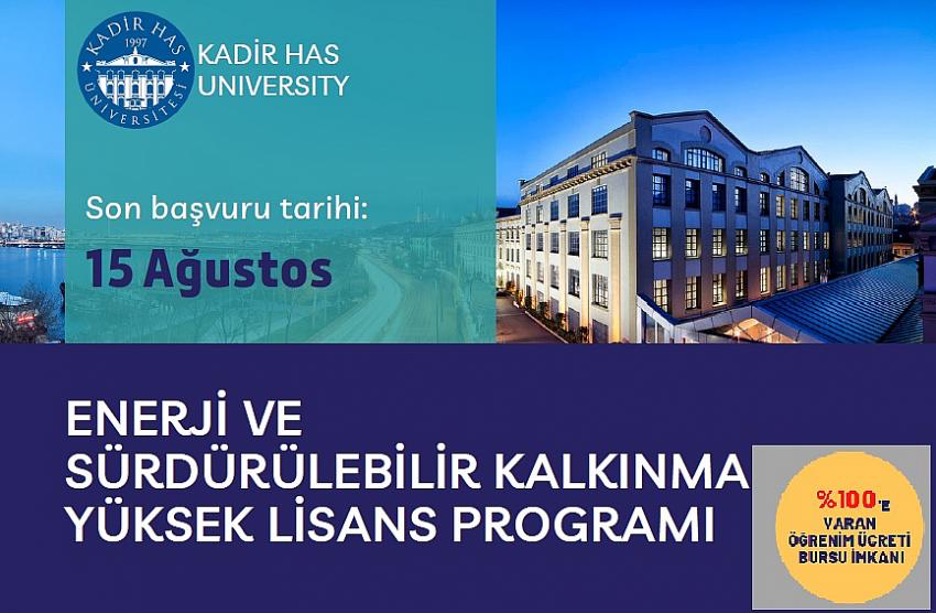
Energy and Sustainable Development Master’s Program
As a vital input of the economy, energy is one of the most strategic tools for the sustainable development of countries. The contemporary energy system, which is 90 percent dependent on fossil fuels, is not sustainable due to resource scarcity, environmental problems, and global climate change. Another factor increasing the importance of energy is that in today’s world, where natural gas is used as a transition fuel on the path toward a low-carbon energy system, the geopolitical rivalry among major energy players continues to heighten. This rivalry accelerates the struggle for resources and causes global economic and political destabilization.
The Turkish energy system is also faced with crucial problems. Turkey imports about a quarter of its energy in exchange for 50-60 billion USD, and its dependence on foreign resources threatens energy security as well as the national security of the country. Turkey’s import dependency on natural gas and oil, which are the most consumed primary resources, is currently more than 90 percent. Furthermore, domestic energy production is gradually decreasing while the gap between production and consumption continues to widen. In the 21st century, the state economy cannot be sustained under such circumstances in energy.
Another important feature of Turkey’s energy system is high energy demand owing to its rapid development, which attracts the attention of the world as a rising market. In the last 50 years, the primary energy demand increased by 5 percent while the demand for electricity increased by 8 percent, and this situation is expected to continue for a long time. Therefore, the efforts to increase domestic production, especially of lignite, should be accelerated while the demand for energy should be decreased by improving energy efficiency. At the same time, standing at the crossroads of major energy producers and consumers, Turkey’s unique geopolitical location provides the country with the opportunity to become an energy bridge and, more importantly, an energy hub. Therefore, it is crucial for Turkey to become a significant energy player in the region.
Due to all these reasons, energy is one of the most attractive sectors for investments in Turkey. The inability of the public sources to provide sufficient financing for investment necessitates most of the energy investments to be made by the private sector. The monetary and fiscal performance of the Turkish economy in recent years, the improvement of the investment environment, and the introduction of new incentive programs have increased the number of long-term energy investments by the private sector. In addition to energy-oriented investments, some of the companies that invest in Turkey are global construction and contracting companies. These companies have started to give more importance to energy efficiency in their housing and plant constructions in order to increase their competitiveness. All of these companies need qualified manpower and state-of-the-art technology. Considering the fact that energy companies are generally located in Istanbul and its surrounding area, it is necessary to open new higher education programs specifically focused on energy.
Even though a number of graduate programs on energy have been opened in recent years, these programs are far from meeting the needs of the sector due to their contextual and structural features. These programs generally focus on a certain aspect of energy, neglecting its interdisciplinary nature. It is expected that the Energy and Sustainable Development Thesis/Non-Thesis Master’s Program, which was opened in the 2016-2017 academic year at Kadir Has University, will fill the gap in this area as it brings together several disciplines in social sciences, physical sciences, and engineering. It is also important to point out that the program works in coordination with the Centre for Energy and Sustainable Development and thus maintains strong ties with interdisciplinary research and practice.
The Energy and Sustainable Development Master’s Program, which is designed by taking all of these factors into consideration, ensures students to specialize in several areas of energy. Students are provided with a wide range of departmental and non-departmental elective courses in addition to the compulsory courses in four main areas, namely, energy science and engineering, energy finance and economics, management of sustainable development and policies, and energy security and geopolitics. In addition to the theoretical knowledge provided by the courses, students are trained in real-life practices through seminars given by experts on the subjects. The most important advantage of the program, offered to students with bachelor’s degrees in many different branches, is the opportunity to acquire expertise in sustainable energy, which is becoming more important every day. The program is designed to be conducted completely in English to increase the competitiveness of students in the careers they will pursue either in Turkey or abroad. The program has thesis and non-thesis options for the purpose of satisfying the varying needs of the students.
Course Title | Aligned SDGs |
Basic Design Studio I | SDG 4, SDG 11 |
Basic Design Studio II | SDG 4, SDG 9, SDG 11 |
Architectural Project III: Design in Urban Context | SDG 9, SDG 11, SDG 12 |
Urban Design and Landscape | SDG 9, SDG 11 |
Sustainable Building Design | SDG 9, SDG 11, SDG 12 |
Building Materials and Technology III: Sustainability and Building Performance | SDG 11, SDG 12, SDG 13 |
Current Debates in Architecture and Urbanism | SDG 11 |
Nature, Landscape and Infrastructure | SDG 9, SDG 11 |
Transformation, Cities and Buildings | SDG 11, SDG 12, SDG 13 |
Sustainability and Ethics in Business Management | SDG 11, SDG 12, SDG 13 |
Hydraulics | SDG 6, SDG 9, SDG 13 |
Water Resources Engineering | SDG 6, SDG 9, SDG 13 |
Design of a Small Hydroelectric Power Plant and Intake Structure | SDG 6, SDG 7, SDG 9 |
Strengthening Existing Structures | SDG 9 |
Innovative Materials in Civil Engineering Applications | SDG 9 |
Technical Writing and Presentation | SDG 4, SDG 9 |
Cloud Infrastructure and Services | SDG 9, SDG 11 |
Cyber Security | SDG 9, SDG 16 |
Internet of Things and Security Project | SDG 9 |
Occupational Health and Safety | SDG 3, SDG 8 |
Growth and Development | SDG 8 |
Sustainable Development | SDG 11, SDG 12, SDG 13 |
Environmental Economics | SDG 8, SDG 11, SDG 12 |
Electromagnetics | SDG 9, SDG 16 |
Wireless Networks Project | SDG 9 |
Wireless Communications | SDG 9 |
Power Electronics | SDG 7, SDG 9, SDG 13 |
Fundamentals of Electric Power and Energy Systems | SDG 4, SDG 7, SDG 9 |
Power System Analysis | SDG 7, SDG 9 |
Sustainable, Resilient, Recoverable and Social Built Environment | SDG 10, SDG 11, SDG 12 |
Photovoltaic Energy Conversion and Nanotechnology | SDG 7, SDG 9, SDG 13 |
Environmental Analysis Methods | SDG 11, SDG 12, SDG 13 |
Interior Architecture Project I: Spatial Unit Studio | SDG 9, SDG 11 |
Interior Architecture Project II: Spatial System Studio | SDG 9, SDG 11 |
Interior Architecture Project III: Spatial Reuse Studio | SDG 9, SDG 11, SDG 12 |
Interior Architecture Project IV: Interior–City and Environmental Interface Studio | SDG 9, SDG 11, SDG 12 |
Health and the Built Environment | SDG 3, SDG 11, SDG 12 |
Sustainability and the Built Environment | SDG 11, SDG 12, SDG 13 |
Interior Architecture Project V: Sustainable Interiors Studio | SDG 9, SDG 11, SDG 12 |
Interior Architecture Project VI – Graduation Project: Complex Interior Spaces Studio | SDG 9, SDG 11 |
Advanced Presentation Media | SDG 4, SDG 11 |
Professional Practice and Ethics | SDG 11, SDG 16 |
Human Behavior and Environmental Design | SDG 9, SDG 11, SDG 12 |
Design and Health | SDG 3, SDG 9, SDG 11 |
Environmental Analysis and Diagrammatic Methods in Design | SDG 9, SDG 11, SDG 12 |
Product Design Studio: Ergonomics and Interfaces | SDG 9, SDG 11, SDG 12 |
Product Design Studio: Structure and Mechanical Components | SDG 9, SDG 11, SDG 12 |
Product Design Studio: Semantics Studies | SDG 9, SDG 11, SDG 12 |
Product Design Studio: Design Research | SDG 4, SDG 9, SDG 11 |
Sustainability in Industrial Design | SDG 9, SDG 11, SDG 12 |
Social Innovation | SDG 9, SDG 10, SDG 12 |
Product Design Studio: Innovation and Product Management | SDG 9, SDG 11, SDG 12 |
Innovation, Entrepreneurship and Career Management | SDG 8, SDG 9 |
Industrial Ecosystem | SDG 8, SDG 9 |
Energy and Sustainability | SDG 7, SDG 8, SDG 9 |
Scientific Revolutions and Their Social Impacts | SDG 4, SDG 10 |
Electromagnetic Waves and Art | SDG 16 |
Artificial Intelligence and Ethical Issues | SDG 9, SDG 16 |
Universal Values and Ethics | SDG 16 |
Civic Responsibility Project | SDG 10 |
Civic Responsibility Project for International Students | SDG 10 |
Environmental Ethics | SDG 11, SDG 12, SDG 13 |
Ecological Economy for a Sustainable Future | SDG 8, SDG 11, SDG 12 |
The Real Cost of Energy Consumption | SDG 7, SDG 9, SDG 13 |
Animals and Us: Violence, Capital, Justice | SDG 5, SDG 10, SDG 15 |
Nutrition Patterns for a “Small” Planet | SDG 2, SDG 12 |
Ecology, Earth and Socio-Economic Impacts of Global Environmental Problems | SDG 8, SDG 11, SDG 12 |
Risks and Opportunities: Climate Activism and Law | SDG 16 |
Climate Crisis Politics: Managing Animality, Poverty and Resilience | SDG 15 |
Nature of the City: A Political Ecology Perspective on Urban Space | SDG 11, SDG 12, SDG 13 |
The Sensory City: Images, Scents, Sounds, Tastes and Textures of Istanbul | SDG 11 |
Systems Thinking and Environmental Perspectives | SDG 11, SDG 12, SDG 13 |
The Future of Food: New Directions in Research and Advocacy | SDG 2, SDG 4, SDG 12 |
Understanding Energy Poverty: How the World Deals with It | SDG 1, SDG 7, SDG 9 |
Ecological Feminisms | SDG 11, SDG 12, SDG 13 |
Energy and Sustainability | SDG 7, SDG 9, SDG 11 |
Building a Sustainable Future: Biodegradable Materials, Composting and Zero-Waste Solutions | SDG 11, SDG 12, SDG 13 |
Eco-Justice: Environmental Ethics and Political Justice | SDG 11, SDG 12, SDG 13 |
Energy Economics: From Concepts to Applications | SDG 7, SDG 8, SDG 9 |
Biomimicry | SDG 15 |
Pavement Engineering | SDG 9, SDG 11 |
Bodily Experience in Urban Space | SDG 11 |
Climate Change in Literature, Art and Film | SDG 4, SDG 13 |
Aesthetics | SDG 16 |
Law, Democracy and Environment | SDG 11, SDG 12, SDG 13 |
Sustainability and Law | SDG 11, SDG 12, SDG 13 |
Climate Law | SDG 16 |
Environmental Law | SDG 11, SDG 12, SDG 13 |
Social Justice and Policy Change | SDG 10 |
Legal Journal on Children’s Rights | SDG 16 |
Genetics and Society | SDG 4, SDG 9, SDG 16 |
Genetics | SDG 4, SDG 9, SDG 16 |
Genetics Lab | SDG 4, SDG 9, SDG 16 |
Cellular Genetics | SDG 4, SDG 9, SDG 16 |
Scientific Ethics | SDG 4, SDG 9, SDG 16 |
Molecular Biology and Genetics I | SDG 4, SDG 9, SDG 15 |
Molecular Biology and Genetics II | SDG 4, SDG 9, SDG 15 |
Web and Social Media Analytics | SDG 9, SDG 10 |
Computer Networks and Security | SDG 9 |
Automotive Drive Systems: Sustainable and Green Engine Technologies | SDG 11, SDG 12, SDG 13 |
Basic Concepts in Social Sciences | SDG 4, SDG 9, SDG 10 |
Information Security | SDG 9, SDG 16 |
Innovative Media Laboratory | SDG 4, SDG 9 |
Digital Research Studio | SDG 4, SDG 9 |
Social Media | SDG 9, SDG 10 |
Social and Economic Issues in Public Relations | SDG 8, SDG 10 |
The EU and Security in the Wider Neighbourhood | SDG 9, SDG 16 |
Seas, Oceans and Civilizations | SDG 14, SDG 16 |
Energy Security | SDG 7, SDG 9, SDG 13 |
Gender and Politics | SDG 5, SDG 10, SDG 16 |
International Security | SDG 9, SDG 16 |
Democracy and Citizenship | SDG 16 |
Human Rights | SDG 16 |
Migration and Borders in Europe | SDG 10, SDG 16 |
Security and Geopolitics in Eurasia | SDG 16 |
Security and Strategy in Southeast Asia | SDG 9, SDG 16 |
Key Topics in Social Psychology | SDG 3, SDG 4, SDG 10 |
Professional Responsibility and Ethics | SDG 4, SDG 16 |
Social Psychology | SDG 3, SDG 4, SDG 10 |
Social Cognition and Attitudes | SDG 4, SDG 10, SDG 16 |
Social Development | SDG 4, SDG 10, SDG 16 |
Health Psychology | SDG 3, SDG 4, SDG 16 |
Qualitative Research Methods in Social Sciences | SDG 4, SDG 10, SDG 16 |
Selected Topics in Social Psychology I | SDG 3, SDG 4, SDG 10 |
Selected Topics in Social Psychology II | SDG 3, SDG 4, SDG 10 |
Selected Topics in Health Psychology I | SDG 3, SDG 4, SDG 16 |
Selected Topics in Health Psychology II | SDG 3, SDG 4, SDG 16 |
Social Neuroscience | SDG 4, SDG 10, SDG 16 |
Social and Political Issues in Public Relations | SDG 10, SDG 16 |
Policy Making and Analysis | SDG 16 |
Strategic Political Communication | SDG 16 |
Issues in Political Public Relations | SDG 16 |
Ethics in Strategic Communication | SDG 16 |
Health Communication | SDG 3, SDG 16 |
Social Awareness, Responsibility and Innovation | SDG 10, SDG 16 |
Film and Gender | SDG 5, SDG 10, SDG 16 |
Voice and Speech – Basic Training | SDG 4 |
Visual Production for Social Media Content | SDG 9, SDG 10 |
Ecology and Design | SDG 9, SDG 11, SDG 12 |
City Studio | SDG 9, SDG 11 |
Global Environmental Issues | SDG 11, SDG 12, SDG 13 |
Environmental Sustainability | SDG 11, SDG 12, SDG 13 |
Climate Change and Global Politics | SDG 13, SDG 16 |
Renewable Energy Systems | SDG 7, SDG 9, SDG 13 |
Environmental Science | SDG 11, SDG 12, SDG 13 |
Introduction to Sustainable Engineering | SDG 7, SDG 9, SDG 11, SDG 12, SDG 13 |
Sustainable Energy Technologies | SDG 7, SDG 9, SDG 13 |
Energy Policy and Management | SDG 7, SDG 9, SDG 13, SDG 16 |
Renewable Energy Project Design | SDG 7, SDG 9, SDG 13 |
Environmental Engineering Principles | SDG 6, SDG 11, SDG 12, SDG 13 |
Environmental Impact Assessment | SDG 11, SDG 12, SDG 13, SDG 15 |
Sustainable Construction Materials | SDG 9, SDG 11, SDG 12 |
Transportation and Environment | SDG 9, SDG 11, SDG 13 |
Green Entrepreneurship | SDG 8, SDG 9, SDG 12, SDG 13 |
Circular Economy | SDG 8, SDG 9, SDG 12 |
Energy and Environment Policy | SDG 7, SDG 9, SDG 11, SDG 13 |
Smart Cities and Sustainable Urban Development | SDG 9, SDG 11, SDG 13 |
Urban Ecology | SDG 11, SDG 12, SDG 13, SDG 15 |
Renewable Energy Economics | SDG 7, SDG 8, SDG 9 |
Advanced Environmental Management | SDG 11, SDG 12, SDG 13 |
Sustainable Transport Systems | SDG 9, SDG 11, SDG 13 |
Environmental Law and Policy | SDG 11, SDG 12, SDG 13, SDG 16 |
Sustainable Development Goals and Global Governance | SDG 16 |
Environmental Sociology | SDG 10, SDG 11, SDG 12 |
Ethics and Sustainable Technology | SDG 9, SDG 12, SDG 13, SDG 16 |
Water and Wastewater Treatment | SDG 6, SDG 11, SDG 12, SDG 13 |
Climate Finance and Policy | SDG 7, SDG 8, SDG 9, SDG 13 |
Renewable Energy Storage Systems | SDG 7, SDG 9, SDG 13 |
Advanced Topics in Renewable Energy | SDG 7, SDG 9, SDG 13 |
Sustainable Tourism | SDG 8, SDG 11, SDG 12 |
Eco-Design and Innovation | SDG 9, SDG 11, SDG 12 |
Urban Agriculture and Food Security | SDG 2, SDG 11, SDG 12, SDG 13 |
Climate Resilience and Adaptation Strategies | SDG 11, SDG 12, SDG 13 |
Disaster Risk Reduction and Management | SDG 11, SDG 13 |
Sustainability in Media and Communication | SDG 4, SDG 12, SDG 13 |
Environmental Journalism | SDG 12, SDG 13, SDG 16 |
Green Marketing and Consumer Behavior | SDG 12, SDG 13 |
Sustainable Finance | SDG 8, SDG 9, SDG 13 |
Environmental Psychology | SDG 3, SDG 11, SDG 12 |
Climate Change Communication | SDG 13, SDG 16 |
Sustainable Fashion Design | SDG 9, SDG 12 |
Sustainable Product Development | SDG 9, SDG 11, SDG 12 |
Environmental Education and Awareness | SDG 4, SDG 11, SDG 12, SDG 13 |
Energy Efficiency in Buildings | SDG 7, SDG 9, SDG 11, SDG 13 |
Renewable Energy Management | SDG 7, SDG 9, SDG 13 |
Urban Resilience and Climate Change | SDG 11, SDG 13 |
Climate Justice and Social Equity | SDG 10, SDG 13, SDG 16 |
Environmental Governance and Policy | SDG 11, SDG 12, SDG 13, SDG 16 |
Sustainable Materials Science | SDG 9, SDG 11, SDG 12, SDG 13 |
Environmental Data Analytics | SDG 9, SDG 12, SDG 13 |
Green Building Certification and Energy Performance | SDG 7, SDG 9, SDG 11, SDG 13 |
Sustainability Assessment and Reporting | SDG 11, SDG 12, SDG 13 |
Life Cycle Assessment | SDG 12, SDG 13 |
Corporate Sustainability and Responsibility | SDG 8, SDG 12, SDG 13, SDG 16 |
Sustainable Innovation and Entrepreneurship | SDG 8, SDG 9, SDG 12, SDG 13 |
Sustainable Energy Policy and Planning | SDG 7, SDG 9, SDG 13 |
Smart Energy Systems | SDG 7, SDG 9, SDG 13 |
Renewable Power Generation Technologies | SDG 7, SDG 9, SDG 13 |
Environmental Risk Assessment | SDG 11, SDG 12, SDG 13 |
Sustainable Transportation Planning | SDG 9, SDG 11, SDG 13 |
Environmental Impact of Technology | SDG 9, SDG 12, SDG 13 |
Climate Change and Human Health | SDG 3, SDG 13 |
Energy Economics and Policy | SDG 7, SDG 8, SDG 9, SDG 13 |
Smart Grid Systems | SDG 7, SDG 9, SDG 13 |
Urban Energy Systems | SDG 7, SDG 9, SDG 11, SDG 13 |
Environmental Humanities | SDG 4, SDG 11, SDG 13 |
Sustainability in Architecture | SDG 9, SDG 11, SDG 12 |
Design for Sustainability | SDG 9, SDG 11, SDG 12 |
Environmental Policy and Governance | SDG 11, SDG 12, SDG 13, SDG 16 |
Energy Transition and Society | SDG 7, SDG 9, SDG 13 |
Environmental Law and Sustainable Development | SDG 11, SDG 12, SDG 13, SDG 16 |
Total number of courses with sustainability embedded for courses running: 142