Building on Brownfield Sites
Wherever possible, Kadir Has University prioritizes the development of new facilities within existing or previously used urban and industrial areas rather than undeveloped land. This approach helps to revitalize disused sites, preserve historically significant industrial structures, and adapt them to serve modern educational and social purposes. By doing so, the university supports sustainable urban transformation while minimizing its environmental footprint.
Kadir Has University: From Industrial Heritage to a Sustainable Campus
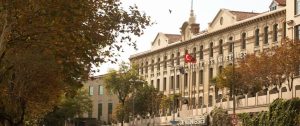
Kadir Has University (KHAS) was founded in 1997 in Istanbul with the vision of creating a leading center for education, culture, and research in Türkiye. The university’s main campus is located in Cibali, one of the city’s oldest neighborhoods, along the shores of the Golden Horn (Haliç).
The site on which KHAS was established has deep historical and industrial roots. Originally built in 1884, the Cibali Tobacco Factory operated for over a century as one of the most significant industrial facilities of the Ottoman and early Republican periods. At its peak, the factory employed over 2,000 workers, including 1,500 women, and functioned as a self-contained industrial complex complete with social and civic infrastructure—schools, health services, and housing.
Following its closure in 1995, the vast factory complex stood abandoned until 1997, when ownership was transferred to Kadir Has University by the Ministry of Finance. Under the guidance of architect Dr. Mehmet Alper, a major brownfield redevelopment and adaptive reuse project began in 1998, transforming the derelict industrial structures into a modern university campus while preserving their architectural integrity and historical character.
The restoration and conservation work between 1998 and 2002 carefully combined elements of the original industrial design—such as the red-brick façades, large arched windows, and open-plan interiors—with contemporary educational infrastructure. This sustainable urban regeneration project not only revitalized a brownfield site but also safeguarded a piece of Istanbul’s industrial heritage, turning it into a hub for learning, culture, and innovation.
On February 13, 2002, the Cibali Campus officially opened its doors, symbolizing the successful transformation of an abandoned industrial area into a vibrant educational institution. Today, the campus serves as an example of how historical preservation, environmental sustainability, and urban renewal can be effectively integrated through adaptive reuse.
Following the campus opening, KHAS continued to expand while adhering to the same sustainability and preservation principles. After 2002, several new buildings were added to complement the former factory structure:
The D Block, used by the Faculty of Law and the Faculty of Engineering and Natural Sciences, was completed as a modern extension to the main building.
The B Block, housing the Faculty of Communication and the Faculty of Economics, Administrative and Social Sciences, was constructed to provide updated classrooms and laboratories.
The C Block, home to the Faculty of Art and Design, was designed with open studio spaces that align with the creative disciplines it serves.
The Rezan Has Museum, situated within the campus, was also established as part of this redevelopment. Located on the lower level of the main building, the museum incorporates the remains of a Byzantine cistern dating back to the 11th century, further emphasizing the integration of cultural heritage within the university’s educational environment.
By the end of 2007, the university expanded further with the completion of the modern D Block, followed by a Sports Hall and associated facilities in 2008, developed in partnership with Fatih Municipality. On March 28, 2007, the campus was officially renamed the “Kadir Has Campus.”
Since its establishment, KHAS has grown both physically and academically under successive rectors, continually improving its sustainable campus infrastructure. As of the 2024–2025 academic year, KHAS operates five faculties, one institute, and one vocational school, offering 24 undergraduate, 33 master’s, and 15 doctoral programs.
In addition, several strategic campus development projects have reinforced KHAS’s commitment to sustainable growth and innovation:
In 2023, the Selimpaşa Campus was converted into a Technopark, promoting research, entrepreneurship, and collaboration between universities and industry.
In 2023, new laboratory buildings were constructed to enhance scientific research capacity.
In 2024, new engineering buildings were completed with energy-efficient and flexible learning designs.
In 2024, a female dormitory was inaugurated, followed by a male dormitory in 2025, improving on-campus accommodation options.
By choosing to rebuild and expand on existing brownfield land rather than developing new areas, Kadir Has University continues to uphold its commitment to heritage conservation, environmental sustainability, and responsible urban transformation—aligning with SDG 11 and SDG 13.