Kadir Has Üniversitesi Ana Sayfa

Erasmus Gelen Öğrenciler İçin İngilizce Rehber

I. KADIR HAS UNIVERSITY

A.  History and General Information

Kadir Has University (KHU) is a foundation university established in 1997, in Istanbul. The university, with its six faculties Art and Sciences Economics and Administrative Sciences, Communication, Law and Fine Arts, as well as its several vocational schools, is dedicated to becoming a leader in educational and cultural fields in Turkey, as well as establishing itself as an international center for research and scientific development.

Kadir Has University is composed of 3 campuses. The main campus is located at Golden Horn. The English Preparatory School is located at Bahcelievler Campus while the Vacational Schoola are at Selimpasa Campus.

KHU’s most important advantage is its main campus’s location on the Golden Horn. This is the Sarayburnu-Fatih axis in the Old City of Istanbul. Hence, it is within walking distance of many major historical and cultural sites, such as Sarayburnu, Hagia Sophia, Sultan Ahmet, Fener, Eyüp, Pera and Galata.

KHU’s Cibali Campus is situated in an area that combines the old city with the modern. This is the Balat quarter of Istanbul’s old city, once known as Stamboul. In the earlier days of the Byzantine Empire, this section of Constantinople was called Armattu, but in later Byzantine times, it became known as Platea, from which its present name was probably derived. During the Ottoman Empire, Balat took on the character of an affluent residential neighborhood occupied by Ottoman citizens of mainly Jewish and Greek ancestry. However, in the latter half of the 19th century, the area was transformed into a bustling industrial center and a hub of commerce on the Golden Horn. Today the area is undergoing another transformation into a major cultural and educational center of Istanbul.

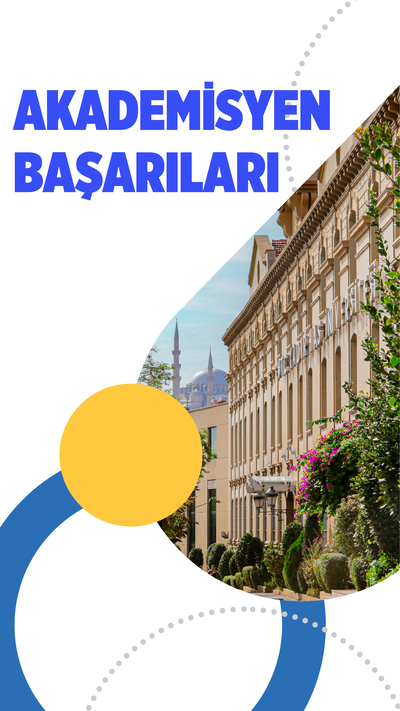
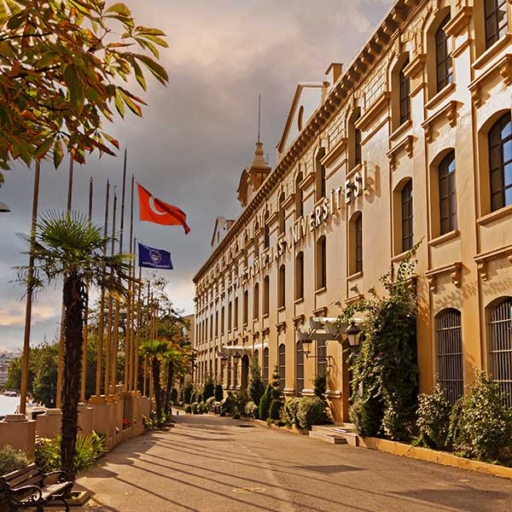
The graceful, neoclassical facade of KHU’s Cibali Campus faces onto the Golden Horn. The building complex was originally built 120 years ago, during the period of Sultan Abdülhamid II. It was known then as the Cibali Tobacco Factory.

In 1995, the factory, most of which had been shut down, was totally abandoned. In 1997, the Finance Ministry handed the buildings over to Kadir Has University. Dr. Mehmet Alper was appointed architect in charge of restoration and renovation of the factory buildings into a university campus. In March 1998 the work began.

The new KHU campus combines elegant facades, sunny atria, and large, airy interiors with state-of-the-art education and research facilities. Four years later the final touches were completed, and Kadir Has University opened officially on January 30, 2002.

The new campus of KHU thus represents a major step in fulfilling the university’s mission of building a future out of the country’s past, by establishing in the heart of Istanbul a hub where culture, education and scientific research meet to address the ever-changing needs of Turkey and the world. In the category of “Architectural Heritage”, the building complex of KHU has been awarded the 2003 Europa Nostra Diploma (European Union Prize for Cultural Heritage) for the rigorous and extensive restoration of the factory building, and for the contribution to the regeneration of its historical surroundings.

B.  The University’s Mission

Kadir Has University is dedicated to becoming a leader in education and culture in Turkey, as well as establishing itself as an international center for research and scientific development.

The aim of the education provided in Undergraduate Faculties, Vocational Schools and Graduate Schools of Kadir Has University is to train bright individuals who have absorbed contemporary and international technology and culture, who will use the knowledge and experience that they have attained to the benefit and welfare of humanity.

C.  Degree Programs

Kadir Has University is composed of the following faculties:

-  Engineering(4 years - 8 semesters) offering BS degrees in Computer Engineering, Electronics Engineering and Industrial Engineering

-  Economics and Administrative Sciences (4 years – 8 semesters) offering BS degrees in Economics, Business Administration, International Relations, International Finance and Tourism Management)

- Sciences and Humanities (4 years – 8 semesters) offering a BA degree in American Literature and Culture and a BS degree in Statistics and Computer Sciences

-  Communication (4 years – 8 semesters) offering BS degrees in Communication Design, Advertisement, Television and Movie, Public Relations

- Law (4 years – 8 semesters) offering a BA degree in Law

- Fine Arts (4 years – 8 semesters) offering BA degrees in Industrial Design, Interior Design and Graphic Design

-  Vocational Schools (2 years – 4 semesters) offering a pre-BA degree in Social Sciences and a pre-BS degree in Technical Sciences and Health Sciences

- Graduate Schools (2 years – 4 semesters) offering a MA degree in Social Sciences, and a MS degree in Technical Sciences and Health Sciences

We are close to achieving our goal of becoming an English-medium University. Continuous English Language support is available in all programs. The Vocational School programs are in Turkish.

D. Academic Rules and Regulations

1)  Academic Year

An academic year consists of fall and spring semesters. Summer semesters are opened only under necessary conditions. The duration of fall and spring semesters is 14 weeks each. This period can be changed by the University Senate. An Academic Calendar is prepared and published by the Academic Council before the beginning of the Academic Year. Summer semester application procedures are organized by a different regulation. The University Senate determines the days and hours of courses offered.  

On legal holidays, no lectures are given and students are not asked to sit for exams. If there is a necessity, lectures and exams can be given on Saturday and Sundays only by the proposal of the related department and with the approval of the University Academic Council. 2)  Courses
The undergraduate degree programs consist of required and elective courses, laboratories, projects, discussion and review sessions and a graduate thesis. E.  Grading

Symbols, Examinations, Attendance and Success

1)  Grades and Symbols

In undergraduate programs, the success of a student in a course is determined by relative evaluation method. This evaluation is determined by the success of the student in that course during the semester, together with her or his final exam grade and general success level in class. A relative evaluation is made by the course instructor, taking into consideration the distribution of grades and class average.

GRADE       POINT

AA  Superior  4,00    
BA  Excellent  3,50    
BB  Good 3,00    
CB  Average 2,50    
CC  Average  2,00    
DC  Deficient – on Probation  1,50    
DD  Deficient- on Probation  1,00    
FF  Failing  0,00    
VF  Unsuccessful in Visa  0,00    

-   A student receiving AA, BA, BB, CB and CC from a course is considered successful.
-   A student who has received DC or DD from a course will be placed on probation for that course.
T is the symbol showing that the student has withdrawn from a course within the add-drop period.
E is given to students who have not completed their project, final paper or similar works by the due date. The instructor of the course determines the deadline of the project. If the student cannot complete it within the given period, then he/she will receive FF.
M Exempt 2)  End of Semester Final Period
Final examinations are given at the end of each semester

F.   European Union Office

The European Union Office was established with the intent of furthering contacts with European universities and taking part in European programs and projects. The objective of Kadir Has University is to join the global network of universities and it hopes to promote academic and cultural relations with European universities. The European Union Coordination Office focuses on facilitating student and faculty exchange programs, promoting research contacts, contributing to international academic and cultural cooperation and giving support to faculties in their participation to EU programs and projects, especially within the context of the EU Framework Programs.

G.  Exchange Programs

Kadir Has University submitted an application for the Erasmus University Charter on November 2003. The application was successful and the university was awarded the Erasmus University Charter for the 2004/05-2006/07 academic year. The Charter (220824-IC-1-2003-1-TR-ERASMUS-EUC-1) entitles Kadir Has University to apply to the European Commission for grant support for Erasmus Transnational Projects and to its Erasmus National Agency for funding for Erasmus mobility activities.
Within this context, Kadir Has University aims at establishing partnerships with other European universities. Bilateral agreements have already been signed with various European universities.

H.  Student Services and Student Life

1.   Library

Kadir Has University is supplementing its traditional library services with the latest technological innovations. The university aims to deliver a high standard of library services that will support the scientific and scholarly activities of all its patrons. To meet these goals, the library occupies an area of a thousand meters and is designed to serve 225 users. KHU Library has a growing collection of books, periodicals, e-books, e-journals, on-line information resources, CD-Rom titles, newspapers and other printed resources. KHU Library also subscribes to a number of online databases, as a participant in consortium of other Turkish university libraries. KHU academic staff members have an opportunity to order books without any limit. Sixteen computers have been provided for internet search, CD-ROM scanning, and an online access to the data bases. In addition, the library offers its patrons a means to communicate with the other universities and information centers. All KHU staff and students can reach to the online Library resources by using any computer located in the campuses. URL address of the library web site is http://library.khas.edu.tr/ The Audio-Visual Room in the Library offers all kinds of equipments for using CD-Rom, audio and video cassettes.

2.  Computer Libraries and Internet Connections

Student laboratories are equipped with 500 computers and 150 computers are in staff offices. All are internet connected. KHU has six computer laboratories (two of them are Sun-Ray1 Thin-client based) at the Cibali campus, three laboratories at the Bahcelievler campus. All laboratories are equipped with the latest multimedia technology. All students at KHU have log-in accounts that allow them access to computers located in the laboratories and in the whole KHU information system.

Currently, Cibali campus is connected to Internet via SuperOnline (The Largest Internet  Service Provider in Turkey) with the capacity of 1 Mbps. Bahcelievler campus also has an Internet connection via SuperOnline with the capacity of 128 Kbps. KHU also has physics and chemistry laboratories for classes and individual research.

3. Student Life

a) Sports

Kadir Has University is very much concerned with the academic and personal development of its student body. Since the University is situated on the shores of the Golden Horn, many KHU students are interested in water sports such as rowing and sailing. The University’s basketball, football, volleyball, handball and table tennis teams participate in meets and tournaments with other universities in Turkey.

b)  Clubs

Kadir Has University offers a variety of student clubs to provide extra-curricular activities that suit the varied interests and capabilities of the students and improve the social life at the University.

Cultural Activities Club: Turkish folk music, Turkish classicl music, folklore, dance and chess
Administrative Sciences Club
Economy-Finance Club
Social Activities Club: radio, theater, social travel
Social Sciences Club
Press Club: magazine, caricature
International Relations Club
Tourism Club
Engineering Club
Psychology Club
Photography Club
Movie Club
Parallel Studies Club
Sportive Activities Club

c) Fine Arts and Performing Arts

The University gives great importance to fine arts and performing arts. Painting, photography and sculpture exhibitions take place regularly at the Cibali Campus. Concerts, theater and other artistic activities are regularly presented on the premises.

II. PREPARATIONS FOR YOUR STAY

In the framework of the Socrates/Erasmus program, if you are chosen to study as an exchange student at Kadir Has University, the following information will guide and help you prepare to stay for a semester or an academic year.    

A.  Visa

All Erasmus students need to obtain a Student Visa. Erasmus students whose application is accepted by Kadir Has University may obtain their visas from Turkish embassies or consulates in their countries.  

B.  Accommodation

The Cibali Campus of Kadir Has University is aptly situated on the Golden Horn, the cultural heart of historic Istanbul. Since it is in the center of the city, it is easily reachable by public transportation. There are many small apartments, dormitories affiliated with the university, hotels and small apartments nearby, where students may easily find lodging in accordance with their needs and budgets. The European Union Office will guide the students in finding an appropriate accommodation.

C. Cost of Living per Month in Euro

Residence                       250 – 400 €  per person
(For shared apartments and dormitories, the price decreases considerably.)
Food                                  150- 200 €
Local Transportation              100 € III. ISTANBUL

A.  History

Prompted by the oracle at Delphi, a man named Byzas established a town on the site of present-day Istanbul around 657 BC. Although conquered by Alexander the Great and eventually subsumed by the Roman Empire, Byzantium fared pretty well until it annoyed a Roman emperor by backing his rival in a civil war, and it was subsequently destroyed. A new city was erected in 330 AD, at first called New Rome but quickly rechristened Constantinople in deference to a new Roman emperor.

Constantinople was regarded as the capital of the Eurasian world, thanks in large part to its magnificent architecture - many of the Christian churches and palaces, as well as the impressive Hippodrome, are still visible today. Embellishments to the city continued as the Eastern Roman Empire grew in strength, reaching its peak in the time of Emperor Justinian in the 6th century. Over the next few centuries the city weathered attacks by the armies of the Islamic and Bulgarian empires, but the crusaders finally sacked it in 1204. The city was reclaimed by a rejuvenated Byzantine Empire 50 years later.

The fall of Constantinople occurred in 1453 when the Ottoman army of Sultan Mehmet II took the city. It was under the Ottomans that a classic mosque design was established and many other great buildings constructed in the city, which was soon renamed Istanbul.

The Turkish War of Independence, during which revitalized nationalist forces fought off invaders from Greece, France and Italy, finally led to the birth of the Turkish Republic in 1923. The seat of the new nation was established in Ankara, and Istanbul, no longer regarded as a political or cultural powerhouse, was relegated to a back-seat role in terms of its prominence as a city. All that changed during the 1980s and 1990s, however, when Turkey experienced an economic and tourism boom, and Istanbul is now re-staking its claim as the 'capital' of the Eastern Mediterranean.

B. Treasures of Istanbul

Istanbul, which had been the capital of Rome, Byzantium and the Ottoman Empire, is one of the most interesting centers of the world owing to its natural beauties, in addition to the historical structures which are the heritage of these cultures.

Istanbul is situated like an open air museum on both shores of the strait which is 33 km in length and separates the continents of Asia and Europe. We know that habitations had existed in the whereabouts of Istanbul during the Neolithic age. The first habitation succeeding these ones came into existence in Kadıköy which was named Khalkedon in the VIIth century B.C. The city that was founded later on the opposite shore of Khalkedon, namely Byzantium, progressed rapidly because of its importance and became a significant center. This progressive city became subject to Roman sovereignty, was adorned with temples and public squares during the period of Constantinius, and was surrounded with city walls.
The city was made the capital of Rome in the year 330 and named Constantinapolis and after Rome was divided into two parts as the Eastern Rome and Western Rome, it was made the capital of the Eastern Roman Empire. Finally, when the Ottomans captured Byzantium in the year 1453, Istanbul was converted into the capital of the Ottoman Empire. Many historical works of art showing traces of these empires have been able to survive up to date. The obelisks belonging to the Roman period, which were used as ornaments of the public square Sultanahmet, are still maintained in their places today. One of these is the obelisk which Theodosius I had ordered to be brought from Egypt in the year 390. The obelisk is 18.54 m (61 ft) in height and seems magnificent today with the hieroglyph scripture on it. Another column which is seen here is the braided column with a height of 20.68 m (68 ft) which Constantinus VII had ordered to be erected in the year 944. The third column, formed by three winding snakes, was ordered to be brought from the Temple of Apollon in Delphi in the year 360 by Constantinus I.

The most important historical remain belonging to Byzantium is Hagia Sophia. Justinianus had this most magnificent temple of the world constructed between the years 532-537 in the place of a temple which had existed there formerly and it contains very valuable mosaics and is still visited as a museum today. St. Irene located at its side which Justinianus had ordered to be constructed in the year 537, is also being used as a museum today. The Monastery of Chora, which attracts attention owing to the mosaic art works inside, and the Mosque of Fethiye are also historical works of art belonging to Byzantium and are visited as museums at present.

When Istanbul was conquered by Sultan Mehmet in 1453, the buildings of Byzantium were repaired and new ones were built and the architectural activities continued. For example, the magnificent Topkapi Palace, the domicile of the Sultan and center of government administration, was constructed. The palace which was built between the years 1472-1478, later acquired the identity of a great city of 700,000 sqm owing to the extensions which the other sultans ordered to be made and to its population exceeding 10,000. It is a magnificent museum today which contains the seraglio and where the treasures belonging to the Ottoman Empire are exhibited.

The Dolmabahçe Palace was constructed during the years 1843-1853 and the Ottoman sultans started to live in it. Sultan Abdülaziz had the Beylerbeyi Palace constructed on the opposite shore of the Bosphorus between the years 1861-1865. Besides these palaces, which are used as museums at present, many buildings which have survived until today such as the Kiosks named Küçüksu, Chalet, Malta and Aynalıkavak, are also open to visitors and are used as museums. In addition to these palaces, many historical mosques, which form the silhouette of Istanbul, are also places worthy of visiting.

Istanbul is adorned with the works of the great architect Sinan, who was a master of perfection during the Ottoman period in the 16th century. Some of Sinan’s master works which show his genius are, the Sehzade Mosque which he built for Prince Mustafa, son of Süleyman the Law Maker in the years 1543-1548; the Mihrimah Mosque which he built in 1548; the Süleymaniye Mosque which he built in the years 1550-1557; and the Rüstem Pasa Mosque, completely adorned with encaustic tiles of Iznik, which he built in the years 1550-1557. The Sultanahmet Mosque, which Sultan Ahmet I had ordered Sedefkar Mehmet Aga to construct between the years 1609-1617, is one of the most important works of art worthy of seeing in Istanbul because of the encaustic tiles therein.     

The Archeological Museum of Istanbul situated near the Topkapi Palace, is one of the richest museums of the world. There are many other museums in Istanbul besides this one, such as The Museum of Turkish and Islamic Arts, Museum of Tapestry and Museum of Sadberk Hanim. Istanbul, the city of beauties maintains its quality as one of the most interesting centers in the world.

C. Cinemas

Cinemas are extremely popular in Istanbul and the latest American movies arrive soon after their release. Films are shown with Turkish subtitles. There are large cinemas in most of the major shopping areas around town, Istiklal Caddesi in Beyoglu, Sisli, and Bahariye Caddesi in Kadıkoy on the Asian side. Tickets are around 8,000,000 TL – 10,000,000 TL and may be purchased ahead for popular films. Some cinemas have cheaper matinees. All cinema tickets are 8,000,000 TL on Wednesdays. In early April, the Istanbul Film Festival takes over a number of screens (generally in Beyoglu and Kadıkoy) for a two week extravaganza of 120 plus films from all over the world.

D.  Performing Arts

Atatürk Cultural Center (AKM)
Taksim Square
Tickets: (0212) 251 10 23/251
The only purpose-built opera house of the city, shared by the State Opera and Ballet, the Symphony Orchestra and the State Theater Company. During the summer period, it hosts the Istanbul Festival.

Aksanat Cultural Center
Istiklal Caddesi Akbank Building Beyoğlu
Tel: (0212) 252 35 00
Offers an interesting program of recorded jazz and classical music via a large laser-disc screen, painting and sculpture exhibitions and drama. Brochures outlining monthly events are available.

Cemal Reşit Rey
Concert Hall Harbiye
Tel: (0212) 240 50 12 / 248 08 63
Large concert hall offering varied programs from rock to opera.

E.  Foreign Currency Exchange

Foreign currency exchange offices (döviz büroları) exist almost everywhere in the city. They offer fast service outside normal banking hours and generally offer better rates than the banks and hotels which also charge commission on cash transactions. Exchange offices charge commission for changing travellers’ cheques and bank cheques. Exchange rates vary with, predictably, offices in tourist areas offering worse rates.

Most pay phones in Istanbul operate with phone cards which can be purchased from post offices (PTT) or from street sellers at a small mark up. Credit card phones can be found in major centers. The international dialing code is 00+ country code.

G. Emergency and Health

Telephone numbers in case of emergency:
Ambulance :112
Police :  155
Fire  :  110
Telephone inquiries  :  118       Istanbul has good medical facilities and plenty of very-well educated doctors. State hospitals are better equipped and cheaper than private hospitals. However, private hospitals are generally less crowded and give better service. In case of an emergency, have some cash or a credit card ready as hospitals expect you to pay immediately for their services.

H. Consulates

Austria  Köybaşı Cad. 46, Yeniköy  
Tel: (0212) 262 93 15  

Belgium  Sıraselviler Cad. 73, Taksim  
Tel: (0212) 243 33 00  

Bulgaria  Ahmet Adnan Saygun Cad. 44, 2. Levent  
Tel: (0212) 269 04 78  

Czech Republic  Abdi İpekçi Cad. 71, Maçka  
Tel: (0212) 230 95 97  

Denmark  Meygede Sok. No. 2, Bebek  
Tel: (0212) 359 19 00  

Estonia  Otağtepe Evleri 6, Kavacık  
Tel: (0216) 332 12 74  

Finland (Honorary)  Çamlık Cad. Ayaz Sok. 2/4 Levent  
Tel: (0212) 283 57 37 / 8  

France  İstiklal Cad. No: 8 Taksim  
Tel: (212) 292 48 10 / 11  

Germany İsmet İnönü Cad. 16 Gümüşsuyu  
Tel: (212)251 54 04 / 05  

Greece  Turnacıbaşı Sok. 32 Galatasaray  
Tel: 212) 245 05 97 / 98  

Hungary  Poyracık Sok. No:35 Teşvikiye  
Tel: (212) 225 55 01  

Iceland (Honorary)  Okul Yolu No: 9 Orhanlı  
Tel: (0216) 394 32 10  

Ireland Republic (Honorary)  Acısu Sok. No.5/4 Maçka  
Tel: (0212) 259 69 79  

Italy  Tomtom Kaptan Sok. 15 Beyoğlu  
Tel: (0212) 243 10 24 / 25  

Latvia (Honorary)  Bağdat Cad. 367/7 Erenköy  
Tel: (0216) 358 82 98  

Liechtenstein  No consulate in Turkey  

Lithuania (Honorary)  Çavuşbaşı Cad. 33, Kavacık  
Tel: (0216) 425 05 00  

Luxembourg  No consulate in Istanbul  

Malta (Honorary) İstiklal Caddesi Korsan Çıkmazı Akdeniz Apt. Kat 2 Beyoğlu  
Tel: (0212) 249 81 62, 244 28 95  

Netherlands İstiklal Cad. 393 Tünel, Beyoğlu  
Tel: (0212) 251 50 30  

Norway  Bilezik Sok. 2 Fındıklı  
Tel: (0212) 249 97 53  

Poland  Büyük Çiftlik Sok. 5/7, Nişantaşı  
Tel: (212) 240 79 56  

Portugal (Honorary)  Fındıklı, Meclisi Mebusan Cad.,157 Kat 5 Kabataş  
Tel: (0212) 251 73 43  

Romania  Sıra Selviler Cad No. 55, Taksim  
Tel: (0212) 292 41 25  

Slovak Republic Acı Su Sokak, Arzu Apt. No. 15/3,7   
Tel: (0212) 227 30 66  

Slovenia,  The Republic of Yapı Merkezi 81180 Çamlıca  
Tel: (0216) 321 90 00  

Spain  Karanfil Aralığı Sok. 16 1. Levent/ Beşiktaş  
Tel: (0212) 270 74 10  

Sweden  İstiklal Cad. 497, Tünel  
Tel: (212) 243 57 70  

United Kingdom  Meşrutiyet Cad. 34 Tepebaşı  
Tel: (212) 293 75 40